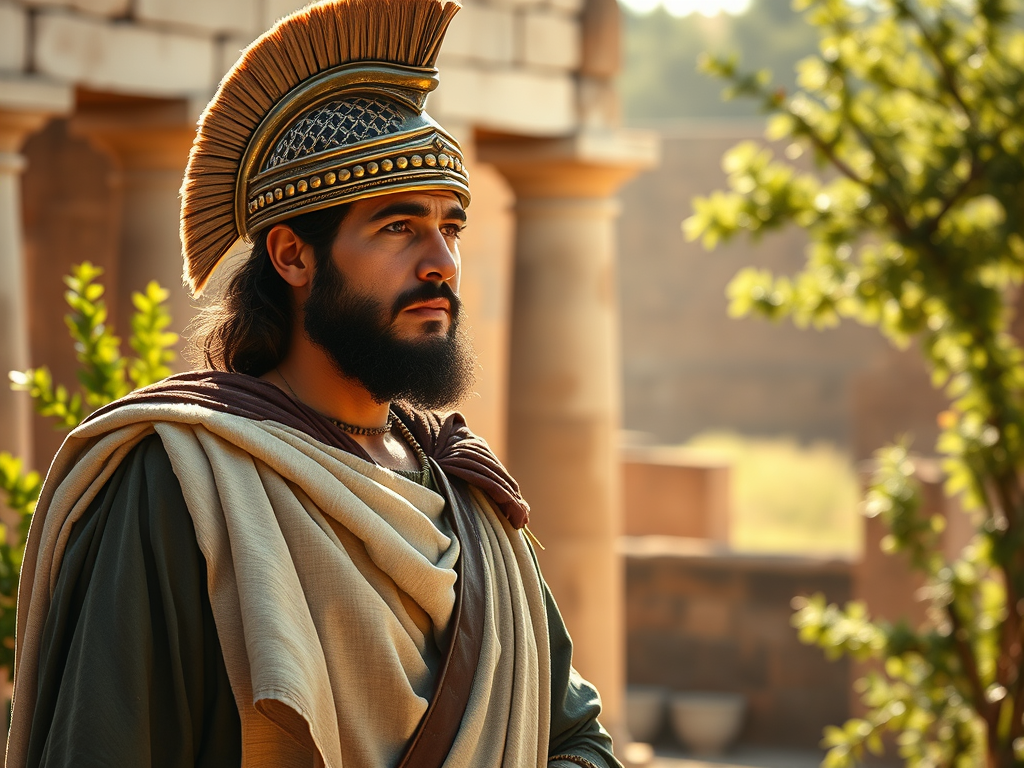
Breaking Barriers: The Profound Encounter at the Well

The story of Jesus and the Samaritan woman at the well, recorded in John 4:1-42, is one of the most profound and intimate conversations in the Bible. It highlights themes of grace, redemption, and breaking societal barriers, while also showcasing Jesus’ divine insight and mission to reach the lost.

A Meeting Destined by Grace

As Jesus journeyed through Samaria, He paused at Jacob’s well in Sychar around noon, weary from His travels (John 4:6). A Samaritan woman approached, ready to draw water, unknowingly stepping into a life-changing conversation.

“There cometh a woman of Samaria to draw water: Jesus saith unto her, Give me to drink.” (John 4:7, KJV)

Her initial response was one of shock—Jews and Samaritans were divided by deep historical animosity. Yet Jesus wasn’t bound by societal prejudices. He redirected the conversation to spiritual matters, offering her “living water”—a symbol of eternal life.

“Jesus answered and said unto her, If thou knewest the gift of God, and who it is that saith to thee, Give me to drink; thou wouldest have asked of him, and he would have given thee living water.” (John 4:10, KJV)

Revealing the Heart’s Condition

Their exchange deepened as Jesus revealed her past, demonstrating His supernatural knowledge.

“For thou hast had five husbands; and he whom thou now hast is not thy husband: in that saidst thou truly.” (John 4:18, KJV)

This revelation stunned the woman, leading her to acknowledge Him as a prophet. Jesus patiently steered the conversation toward true worship, teaching that worship was no longer confined to a physical location, but rather centered in spirit and truth (John 4:23-24).

The Messiah Revealed

The turning point came when Jesus openly declared His identity as the Messiah—a rare and powerful moment.

“Jesus saith unto her, I that speak unto thee am he.” (John 4:26, KJV)

At this moment, His disciples returned, witnessing Him converse with a Samaritan woman—a societal taboo. But the woman left her waterpot behind and ran into the city, boldly proclaiming:

“Come, see a man, which told me all things that ever I did: is not this the Christ?” (John 4:29, KJV)

A Chain Reaction of Faith

Her testimony sparked an awakening in Sychar—many believed in Jesus because of her word, and even more after personally hearing Him.

“And many more believed because of his own word; And said unto the woman, Now we believe, not because of thy saying: for we have heard him ourselves, and know that this is indeed the Christ, the Saviour of the world.” (John 4:41-42, KJV)

How Was This Conversation Recorded?

One might ask: How did this private conversation become part of the Gospel if no other witnesses were present? Here are a few possible explanations:

  1. Eyewitness Accounts – The Samaritan woman spread the message, possibly sharing the details of the conversation with Jesus’ disciples, who later recorded it.
  2. Divine Inspiration – Christians believe that Scripture was divinely inspired, ensuring that important conversations were accurately included.
  3. Oral Tradition – Biblical accounts were preserved through oral storytelling before they were written down.
  4. Narrative Style – Gospel writers focused on the theological importance rather than strict journalistic reporting, ensuring that the meaning and essence of Jesus’ words were captured.

Why This Encounter Still Matters

This passage remains one of the most powerful testimonies of grace. It demonstrates:

  • Jesus’ willingness to break barriers—cultural, racial, and gender-related.
  • Salvation is for everyone, not just the religious elite.
  • Personal encounters with Jesus lead to transformation, as seen in the woman’s immediate evangelism.

Much like the woman at the well, Jesus meets us in our brokenness and offers living water—a life that never runs dry.

For more information and study check out the books from Grow Stronger Roots on Amazon.

The Great Commission: Jesus’ Final Call to Action (Matthew 28:16-20, KJV)

In Matthew 28:16-20, we find one of the most defining moments in the Christian faith—Jesus’ final command to His disciples before ascending to heaven. These verses, often referred to as The Great Commission, read:

“Then the eleven disciples went away into Galilee, into a mountain where Jesus had appointed them. And when they saw him, they worshipped him: but some doubted. And Jesus came and spake unto them, saying, All power is given unto me in heaven and in earth. Go ye therefore, and teach all nations, baptizing them in the name of the Father, and of the Son, and of the Holy Ghost: Teaching them to observe all things whatsoever I have commanded you: and, lo, I am with you alway, even unto the end of the world. Amen.” (Matthew 28:16-20, KJV)

The Weight of Jesus’ Words

This moment comes after Jesus’ resurrection—a time of great awe, hope, and transformation. The disciples had witnessed the greatest miracle in history: Jesus conquering death. Yet, even in their joy, Scripture acknowledges that “some doubted.”

Jesus, aware of their uncertainty, reassures them with a bold declaration: “All power is given unto me in heaven and in earth.” (Matthew 28:18, KJV) This is not just encouragement; it is a statement of absolute divine authority. He is Lord over all creation, and this authority is the foundation of His command to go.

The Call to Make Disciples

Jesus gives a clear and unwavering mission: “Go ye therefore, and teach all nations.” (Matthew 28:19, KJV) This wasn’t just a call for the eleven disciples gathered that day—it was a call that echoes through the generations, reaching every believer.

Making disciples goes beyond simply sharing the gospel—it means investing in others, teaching them, and guiding them toward a deeper relationship with Christ. It is a mission that requires both boldness and patience.

Baptism and Teaching

Jesus outlines the two essential practices of discipleship:

  1. Baptizing—a public declaration of faith, an outward symbol of an inward transformation. (“Baptizing them in the name of the Father, and of the Son, and of the Holy Ghost.” – Matthew 28:19, KJV)
  2. Teaching—guiding others to understand, embrace, and live out Christ’s teachings. (“Teaching them to observe all things whatsoever I have commanded you.” – Matthew 28:20, KJV)

This is not just about converting people—it’s about fostering lifelong discipleship, helping believers walk in faith and obedience.

The Promise of His Presence

Perhaps the most comforting part of Jesus’ commission is His final promise: “Lo, I am with you alway, even unto the end of the world.” (Matthew 28:20, KJV)

Jesus doesn’t send us on this mission alone. He assures us of His continual presence, His guidance, and His strength. No matter the challenges, no matter the opposition, He remains with us.

What This Means for Us Today

The Great Commission is not a suggestion—it is a command. It is the heartbeat of the Christian life. Whether through conversations, acts of service, missions, or simply living out faith authentically, every believer is called to participate in this divine assignment.

Are we actively sharing the hope of Christ? Are we investing in the spiritual growth of others? Are we living with the assurance that He is always with us?

The Great Commission is more than a passage—it is a calling that continues today. May we boldly step forward, knowing that Jesus goes with us.

For more information and study check out the books from Grow Stronger Roots on Amazon.

The Glory of Christ and the Fulfillment of His Mission: A Reflection on John 17:4-5

John 17:4-5 is a powerful moment in Scripture, capturing Jesus’ deep communion with the Father as He prepares for the ultimate sacrifice. These verses read:

“I have glorified You on the earth. I have finished the work which You have given Me to do. And now, O Father, glorify Me together with Yourself, with the glory which I had with You before the world was.” (NKJV)

In these words, Jesus acknowledges that He has fulfilled His mission—He has lived in perfect obedience, revealed the Father to humanity, and laid the foundation for redemption. But now, He turns His gaze toward the glory He shared with the Father before time began.

The Glory of Christ in His Earthly Ministry

Jesus says, “I have glorified You on the earth.” How did He do this? Every act of love, every miracle, every teaching, and ultimately, His willingness to take on the sins of the world glorified God. His life was a living testimony of the Father’s character—full of grace, truth, justice, and mercy.

Though He walked the earth in humility, He carried the very essence of divine glory. Unlike worldly glory, which fades, His glory was rooted in obedience, servanthood, and perfect love.

The Completion of His Work

Jesus also says, “I have finished the work which You have given Me to do.” This is a remarkable statement. Though His crucifixion had not yet happened, He speaks with certainty—His mission is as good as done. He has set everything into motion for salvation. Soon, through His death and resurrection, He will conquer sin, death, and the powers of darkness.

This moment reminds us that Christ was not a victim of circumstances—He was always in control, walking in divine purpose. His obedience to the Father was complete, even in the face of suffering.

A Glorious Restoration

Finally, Jesus prays, “And now, O Father, glorify Me together with Yourself, with the glory which I had with You before the world was.” Here, Jesus anticipates His return to divine glory, the majesty He shared with the Father before creation.

This verse gives us a glimpse into the eternal nature of Christ. Before the incarnation, before He walked among us, He existed in perfect unity with the Father, clothed in divine splendor. Now, as He prepares for His greatest act—His sacrifice—He looks ahead to being reunited with the Father in glory.

What This Means for Us

These verses remind us of Jesus’ unwavering obedience and His divine nature. He was fully man, yet fully God, fulfilling His mission with absolute certainty. They also invite us to reflect on our own lives—how are we glorifying God in our daily walk? Do we live with purpose, knowing that we are called to follow Christ’s example?

John 17:4-5 is not just a window into Jesus’ heart; it is an invitation for us to live with the same focus. May we seek to glorify God in all that we do, knowing that we are part of His redemptive story.

For more information and further study check out the books from Grow Stronger Roots on Amazon.

Biblical Principles of Investing: Wisdom from Scripture

Investing wisely is a principle woven throughout the Bible, teaching us to be diligent, ethical, and faithful stewards of the resources God provides. While the Bible does not directly address stock markets or modern financial systems, it offers timeless wisdom on stewardship, growth, and trust in God rather than wealth.

Investing with Wisdom and Diligence

The Bible encourages careful planning and thoughtful investment. Wise financial decisions reflect good stewardship, bringing productivity and growth.

“She considereth a field, and buyeth it: with the fruit of her hands she planteth a vineyard.” (Proverbs 31:16, KJV)

This verse highlights the importance of making strategic investments, using resources wisely, and working diligently toward prosperity.

Diversification and Risk Management

In Ecclesiastes, Solomon offers a principle that closely aligns with modern investment strategies:

“Give a portion to seven, and also to eight; for thou knowest not what evil shall be upon the earth.” (Ecclesiastes 11:2, KJV)

Diversification is a biblical principle that helps mitigate risk. Just as farmers plant various crops to safeguard against poor harvests, investors should wisely distribute their resources.

Avoiding the Love of Money

While investing can be beneficial, the Bible warns against greed and trusting in wealth over God.

“Lay not up for yourselves treasures upon earth, where moth and rust doth corrupt, and where thieves break through and steal: But lay up for yourselves treasures in heaven…” (Matthew 6:19-20, KJV)

Money should never become an idol. The purpose of investing is not simply personal gain but to use resources for good—to bless others and glorify God.

Generosity and Ethical Investing

Biblical investing should align with ethical principles, ensuring that wealth is used righteously. Paul urges believers to be generous rather than hoarding riches:

“Charge them that are rich in this world, that they be not highminded, nor trust in uncertain riches, but in the living God… That they do good, that they be rich in good works, ready to distribute, willing to communicate.” (1 Timothy 6:17-18, KJV)

Investments should align with Christian values, avoiding industries that exploit or harm others. Additionally, giving should be a priority, ensuring that wealth is used for charitable purposes and kingdom-building.

Conclusion

Biblical investing is about wisdom, stewardship, ethical decisions, and keeping faith in God rather than wealth. By applying these scriptural principles, believers can make investments that honor God, provide for their families, and contribute to the greater good.

What are your thoughts on biblical stewardship? I’d love to hear how you apply these principles in your financial decisions.

For more information and study check out the books from Grow Stronger Roots on Amazon.

The Challenge of Wealth and the Power of God

A Reflection on Matthew 19:23-26 (KJV)

In Matthew 19:23-26, Jesus presents a striking statement about wealth and salvation, followed by a reassuring declaration about God’s power and grace. This passage has sparked reflection for centuries, challenging believers to reconsider the priorities of their hearts. Let’s dive into these verses and explore their meaning.

The Challenge of Wealth

Jesus begins with a solemn warning:

“Verily I say unto you, That a rich man shall hardly enter into the kingdom of heaven.” (Matthew 19:23, KJV)

He then intensifies His point with a vivid analogy:

“And again I say unto you, It is easier for a camel to go through the eye of a needle, than for a rich man to enter into the kingdom of God.” (Matthew 19:24, KJV)

This verse contains one of the most striking images in the Bible—Jesus compares the difficulty of a rich person entering God’s kingdom to the near impossibility of a camel passing through the eye of a needle. This exaggerated metaphor emphasizes how wealth, when not managed with humility and righteousness, can hinder one’s spiritual journey.

Historically, there have been interpretations of what “the eye of a needle” means:

Hyperbole to Make a Point – In Jewish literature, exaggerated comparisons were common, and Jesus may simply be using an extreme example to emphasize how difficult it is to rely on wealth while maintaining a surrendered heart toward God.

Literal Interpretation – A camel, one of the largest animals in the region, cannot physically pass through a tiny sewing needle’s eye, making the task utterly impossible without divine intervention.

The Needle Gate Theory – Some suggest that ancient cities had small gates called “Needle’s Eye,” requiring travelers to unload and their camels must kneel before passing through. This interpretation stresses humility—one must remove earthly burdens to enter God’s kingdom.

The Disciples’ Astonishment

The disciples, hearing this, are troubled:

“When his disciples heard it, they were exceedingly amazed, saying, Who then can be saved?” (Matthew 19:25, KJV)

Jesus had just declared how difficult it is for a rich person to enter the kingdom of God, using the striking analogy of a camel passing through the eye of a needle (Matthew 19:24). This statement left His disciples utterly astonished.

Why Were They Amazed?

In the cultural and religious mindset of the time, wealth was often viewed as a sign of God’s blessing and favor. Many believed that prosperous individuals had a greater advantage in righteousness, as they could give generously, support religious causes, and avoid the hardships associated with poverty.

So, when Jesus suggested that riches could actually be an obstacle to salvation, the disciples were perplexed. If even the wealthy faced difficulty entering God’s kingdom, what hope was there for anyone else? Their question—“Who then can be saved?”—reflects their deep concern about humanity’s ability to attain eternal life.

The Deeper Message

The disciples’ amazement underscores a significant truth: salvation is not achieved through human effort, wealth, or status. It is entirely dependent on God’s grace. This sets the stage for Jesus’ response in the next verse (Matthew 19:26):

“But Jesus beheld them, and said unto them, With men this is impossible; but with God all things are possible.”

This reveals that salvation is not about personal merit but rather about divine intervention. No one can earn their way into God’s kingdom, but through faith and God’s power, eternal life is made accessible to all.

A Call to Trust in God

These verses challenge us to examine our hearts. Are we placing our confidence in earthly wealth or in God’s mercy? Jesus’ words remind us that salvation is a divine gift, not a human achievement.

As we navigate life’s blessings and responsibilities, let us seek a heart posture that prioritizes faith, humility, and dependence on God over material possessions. After all, with God, all things are possible.

What are your thoughts on this passage? How has it shaped your understanding of faith and trust in God?

For more information and study check the books from Grow Stronger Roots on Amazon.

The Book of Revelation: A Quick Journey Through Prophecy

I am not a big prophecy person. But I am an advocate of Bible Study no matter the topic. The Book of Revelation is one of the most mysterious and powerful books in the Bible. Written by John the Apostle, it unveils prophetic visions of the end times, the return of Christ, and the ultimate victory of righteousness. Through vivid imagery and symbolic language, Revelation offers hope and warning to believers.

The Vision of Christ

John begins with a vision of Jesus Christ, who appears in glory, declaring His authority over all creation:

“I am Alpha and Omega, the beginning and the ending, saith the Lord, which is, and which was, and which is to come, the Almighty.”Revelation 1:8 (KJV)

This declaration sets the tone for the book, emphasizing Christ’s eternal nature and sovereignty.

The Seven Churches

John is instructed to write letters to seven churches, each receiving commendation or correction. These messages serve as guidance for believers:

“He that hath an ear, let him hear what the Spirit saith unto the churches.”Revelation 2:7 (KJV)

The letters encourage faithfulness, warn against complacency, and call for repentance.

The Throne of God and the Scroll

John is taken into heaven, where he witnesses the throne of God and a sealed scroll that only Christ can open:

“And I beheld, and, lo, in the midst of the throne… stood a Lamb as it had been slain.”Revelation 5:6 (KJV)

This moment reveals Christ as the worthy Lamb, who alone can unveil God’s divine plan.

The Four Horsemen and Tribulation

The opening of the seals brings forth the Four Horsemen, symbolizing conquest, war, famine, and death:

“And I saw, and behold a white horse: and he that sat on him had a bow; and a crown was given unto him.”Revelation 6:2 (KJV)

These events mark the beginning of great tribulation upon the earth.

The Final Battle and Victory

Revelation culminates in the battle between good and evil, where Christ triumphs over darkness:

“And I saw heaven opened, and behold a white horse; and he that sat upon him was called Faithful and True.”Revelation 19:11 (KJV)

Satan is defeated, and a new heaven and new earth are established:

“And God shall wipe away all tears from their eyes; and there shall be no more death, neither sorrow, nor crying, neither shall there be any more pain.”Revelation 21:4 (KJV)

Conclusion: A Call to Faith

The Book of Revelation is not just a prophecy—it is a call to faith. It reminds believers to remain steadfast, knowing that Christ will return in glory:

“Surely I come quickly. Amen. Even so, come, Lord Jesus.”Revelation 22:20 (KJV)

May we all be prepared for His coming, living in faith and righteousness.

For more study and understanding of the Christian Life check out the books from Grow Stronger Roots on Amazon.

Exploring the Book of Romans: A Dive into Paul’s Masterpiece

The Book of Romans, written by the Apostle Paul, is often considered one of the most profound books in the Bible. It lays out the core principles of Christian theology, addressing salvation, faith, grace, and the righteousness of God. This letter, written to believers in Rome, serves as a theological foundation that has shaped Christian thought for centuries.

Paul’s Purpose in Writing Romans

Paul’s purpose in writing Romans was to provide a systematic explanation of the gospel. He sought to clarify the relationship between Jews and Gentiles in God’s plan and emphasize justification by faith rather than works.

“For I am not ashamed of the gospel of Christ: for it is the power of God unto salvation to every one that believeth; to the Jew first, and also to the Greek.” (Romans 1:16, KJV)

Key Themes in Romans

  1. The Universality of Sin Paul begins by establishing that all humanity—Jew and Gentile alike—are under the power of sin. No one is righteous on their own, and everyone stands in need of God’s grace.

“For all have sinned, and come short of the glory of God;” (Romans 3:23, KJV)

  1. Justification by Faith The central message of Romans is that righteousness comes not through the law, but through faith in Jesus Christ. This doctrine was revolutionary, shifting the focus from works to grace.

“Therefore being justified by faith, we have peace with God through our Lord Jesus Christ:” (Romans 5:1, KJV)

  1. Victory Over Sin Through Christ Paul teaches that believers are no longer slaves to sin but are freed through Christ. This transformation is made possible through the power of the Holy Spirit.

“For the wages of sin is death; but the gift of God is eternal life through Jesus Christ our Lord.” (Romans 6:23, KJV)

  1. The Role of the Holy Spirit Romans 8 is one of the most encouraging chapters, detailing the work of the Holy Spirit in a believer’s life. It assures Christians that nothing can separate them from God’s love.

“There is therefore now no condemnation to them which are in Christ Jesus, who walk not after the flesh, but after the Spirit.” (Romans 8:1, KJV)

Application for Today

Romans remains highly relevant in the modern world, reminding believers of the power of grace and the importance of living out their faith. It calls Christians to be transformed by the renewal of their minds and to present themselves as living sacrifices to God.

“And be not conformed to this world: but be ye transformed by the renewing of your mind, that ye may prove what is that good, and acceptable, and perfect, will of God.” (Romans 12:2, KJV)

Conclusion

The Book of Romans is a masterpiece of Christian theology that continues to inspire and challenge believers today. Through its teachings on salvation, faith, and grace, Paul provides a roadmap for a life lived in communion with God.

For more information and study check out books from Grow Stronger Roots on Amazon.

God’s Promise to Complete His Good Work in You

Life is filled with uncertainties, challenges, and moments of doubt, but Philippians 1:6 provides a powerful assurance of God’s faithfulness:

“Being confident of this very thing, that he which hath begun a good work in you will perform it until the day of Jesus Christ.” (Philippians 1:6, KJV)

This verse is a reminder that God is actively working in the lives of believers, shaping them for His divine purpose and ensuring that His work in them will not be left unfinished.

God is the Author of Our Growth

From the moment of salvation, God begins a transformation in the hearts of His people. As 2 Corinthians 5:17 states:

“Therefore if any man be in Christ, he is a new creature: old things are passed away; behold, all things are become new.” (KJV)

This change is not merely external—it is a deep spiritual renewal. God doesn’t abandon His creation; rather, He continues to mold, refine, and strengthen His children through His grace.

God’s Work is Continuous and Purposeful

Unlike human endeavors that may falter, God’s work is steadfast. Romans 8:28 assures us:

“And we know that all things work together for good to them that love God, to them who are the called according to his purpose.” (KJV)

Even in trials and setbacks, God is weaving a plan that leads to fulfillment and spiritual maturity.

The Promise of Completion

The phrase “until the day of Jesus Christ” points to the ultimate completion of God’s work when Christ returns. 1 John 3:2 offers further hope:

“Beloved, now are we the sons of God, and it doth not yet appear what we shall be: but we know that, when he shall appear, we shall be like him; for we shall see him as he is.” (KJV)

This means believers are not just being refined for the present life but for an eternal destiny with Christ.

A Call to Trust and Persevere

Because of this divine promise, believers can live with confidence, knowing that their spiritual journey is under God’s care. As Hebrews 10:23 encourages:

“Let us hold fast the profession of our faith without wavering; (for he is faithful that promised;)” (KJV)

If you ever feel weary or uncertain, remember: God will never abandon what He has started in you. Trust in His timing, His guidance, and His perfect plan.

For more information and study check out the books from Grow Stronger Roots on Amazon.

God Does Not Call the Qualified: God Qualifies the Called

Many people hesitate to step into their calling, thinking they must first be perfectly equipped. But scripture repeatedly shows that God doesn’t wait for perfection—He takes ordinary people and prepares them for extraordinary purposes.

God Chooses the Unlikely

Throughout the Bible, we see God calling people who, by human standards, seemed unqualified. Moses, for instance, doubted his ability to lead because of his speaking limitations. He protested, “O my Lord, I am not eloquent … but I am slow of speech and of tongue” (Exodus 4:10, ESV). Yet, God didn’t search for a more articulate leader; instead, He assured Moses, “I will be with your mouth and teach you what you shall speak” (Exodus 4:12, ESV). God was more concerned with his willingness than his weaknesses.

Similarly, David was overlooked even by his own family when the prophet Samuel came seeking Israel’s future king. He was a mere shepherd boy, but God saw his heart. “For the Lord sees not as man sees: man looks on the outward appearance, but the Lord looks on the heart” (1 Samuel 16:7, ESV).

God Equips the Called

When God calls someone, He provides what is needed to fulfill the mission. Paul reminds us in 2 Corinthians 3:5 that our sufficiency is not from ourselves but from God: “Not that we are sufficient in ourselves … but our sufficiency is from God” (ESV).

Gideon felt unqualified to save Israel, saying, “My clan is the weakest … and I am the least in my father’s house” (Judges 6:15, ESV). But God responded, “I will be with you, and you shall strike the Midianites as one man” (Judges 6:16, ESV). Gideon didn’t need military expertise—he just needed trust.

A Call to Step Forward in Faith

If God is calling you to something, don’t let feelings of inadequacy hold you back. Consider how Jesus called uneducated fishermen to become His disciples—men who changed the world not because of their qualifications but because they walked with Christ.

As Philippians 1:6 reminds us, “… He who began a good work in you will bring it to completion at the day of Jesus Christ” (ESV).

Trust that if God has called you, He will equip you for the journey.

For more information and study check out books from Grow Stronger Roots on Amazon.

Fear Not: God’s Promise of Strength and Help (Isaiah 41:10, KJV)

Life presents us with challenges and moments of uncertainty, but in Isaiah 41:10, God speaks directly to our fears and offers His unwavering presence and support:

“Fear thou not; for I am with thee: be not dismayed; for I am thy God: I will strengthen thee; yea, I will help thee; yea, I will uphold thee with the right hand of my righteousness.” (Isaiah 41:10, KJV)

This verse is a declaration from God that reminds us that, despite trials, we are never alone. Let’s explore the promises contained within this passage.

1. Fear Not: God’s Presence Is With You

God’s repeated command “Fear thou not” is echoed throughout Scripture:

  • Deuteronomy 31:6“Be strong and of a good courage, fear not, nor be afraid of them: for the Lord thy God, he it is that doth go with thee; he will not fail thee, nor forsake thee.”
  • Joshua 1:9“Have not I commanded thee? Be strong and of a good courage; be not afraid, neither be thou dismayed: for the Lord thy God is with thee whithersoever thou goest.”

These verses emphasize that fear dissipates when we acknowledge God’s presence. He walks with us through every trial, and we can trust His nearness.

2. Be Not Dismayed: God Is Our Strength

God reassures us in Isaiah 41:10: “I am thy God.” He is not a distant deity—He is personal and actively involved in our lives. This theme appears throughout Scripture:

  • Psalm 46:1“God is our refuge and strength, a very present help in trouble.”
  • 2 Corinthians 12:9“And he said unto me, My grace is sufficient for thee: for my strength is made perfect in weakness.”

When we feel overwhelmed, He strengthens us, reminding us that we can lean on Him for every challenge we face.

3. Strength, Help, and Upholding: God’s Threefold Promise

Isaiah 41:10 contains three distinct promises:

  • “I will strengthen thee” – God provides strength when we feel weak.
  • “I will help thee” – He offers divine assistance when our burdens are too heavy.
  • “I will uphold thee with the right hand of my righteousness” – He secures us, guiding us in His will.

The Psalms reinforce this idea:

  • Psalm 18:2“The Lord is my rock, and my fortress, and my deliverer; my God, my strength, in whom I will trust.”
  • Psalm 55:22“Cast thy burden upon the Lord, and he shall sustain thee: he shall never suffer the righteous to be moved.”

Reflection & Application

  • What fears are weighing on your heart today? Trust in God’s presence and surrender them to Him.
  • How has God strengthened you in past struggles? Reflect and thank Him for His faithfulness.
  • Commit Isaiah 41:10 to memory and let it remind you of God’s promises in times of trouble.

Closing Prayer

Lord, thank You for Your promises in Isaiah 41:10. When fear and doubt arise, remind me that You are near. Strengthen me, help me, and uphold me in Your righteousness. I trust You to walk with me through every challenge. Amen.

For more study and information check out books from Grow Stronger Roots on Amazon.

Grow Stronger Roots

Aiding the new believer in their walk with Christ

Skip to content ↓