Part 2: The Renewed Mind — Living From the Inside Out

“Do not be conformed to this world, but be transformed by the renewal of your mind…” – Romans 12:2

A changed life begins with a changed mind. In Part 1, we explored presenting ourselves as living sacrifices. Now, Paul draws our attention to the battleground of the soul: the mind. Inner transformation isn’t cosmetic; it’s core—reshaping how we think, perceive, and respond to the world around us.

1. Why the Mind Matters

The mind is where beliefs are forged, decisions made, and loyalties tested. Paul’s command isn’t passive—it’s a call to continual resistance. To conform to the world is to allow external pressures to shape our internal reality. But renewal flips the script. It’s not about behavior modification. It’s about re-formation.

This spiritual mindset is anchored in eternity. It discerns God’s will and aligns our desires with His heart. The renewed mind doesn’t just know scripture—it’s saturated by it, able to distinguish truth from clever imitation, light from shadow.

2. Resisting Worldly Patterns

Worldly patterns often masquerade as wisdom: self-promotion, instant gratification, performance-based worth. Without conscious awareness, these values seep into our thinking like dye in water. Renewal is a daily refusal to be molded by culture and a choice to be shaped by Christ.

Jesus’ temptations in the wilderness mirrored the very patterns we’re warned against: craving, spectacle, and power. His response? The written Word. That same Word now guides our renewal.

3. How to Renew the Mind

Here are practical ways believers can partner with the Spirit in this transformation:

  • Daily Scripture Immersion – Not just reading but meditating on truth. Let the Word interrogate your thoughts and rewrite your instincts.
  • Spirit-led Prayer – Invite the Holy Spirit to uncover patterns of thinking that don’t reflect Kingdom values. Ask Him to replace them with truth.
  • Guard Your Inputs – What we watch, read, and engage with shapes our thinking more than we realize. Curate your media diet like your soul depends on it.
  • Practice Gratitude and Reframing – Shifting focus from fear or scarcity to God’s provision transforms anxiety into peace and criticism into compassion.
  • Community and Accountability – Iron sharpens iron. Surround yourself with believers who challenge, inspire, and walk alongside you in truth.

Living From the Inside Out

The renewed mind is not a one-time event—it’s a sacred rhythm. A process of continual dying to the old and awakening to the new. In a world shouting for conformity, may we be those who quietly but powerfully reflect a better way: Christ formed in us.

Devotional: Transformed Thinking

Scripture: “Do not be conformed to this world, but be transformed by the renewal of your mind…” – Romans 12:2 (ESV)

Reflection: Conformity is quiet. It doesn’t shout, it seeps. The world’s ways—its values, anxieties, and ambitions—can subtly shape us until we’re no longer living from faith but from habit. But Paul offers a radical alternative: be transformed. The battleground isn’t behavior alone—it’s the mind.

Renewal starts with awareness. What thoughts shape your daily decisions? Are they formed by scarcity or abundance? Fear or trust? Culture’s voice or Christ’s?

To be transformed is to let the Spirit interrupt our default patterns and replace them with truth. It’s not one moment—it’s a posture. Over time, the renewed mind begins to see pain as purpose, waiting as worship, and obedience as joy.

Prayer: Lord, I don’t want to drift into the world’s mold. Renew my thoughts by Your Word. Teach me to see as You see—so that I may live as You desire. Shape me from the inside out. Amen.

Practice: Today, notice one pattern of worldly thinking in your mind—comparison, control, or self-doubt. Then, counter it with Scripture. Post that truth somewhere visible. Let renewal be intentional.


Part 1: Rooted in the Spirit

Scripture Focus: Galatians 5:16–25

In a world that constantly pulls us in a thousand directions, the Apostle Paul’s words in Galatians offer a clear, yet challenging invitation: “But I say, walk by the Spirit, and you will not gratify the desires of the flesh.” (Galatians 5:16, ESV)

To walk in the Spirit means to intentionally align our thoughts, actions, and desires with the heart of God. It’s not about perfection—it’s about direction. Paul sets up a striking contrast between the “acts of the flesh” and the “fruit of the Spirit.” Where the former leads to division, excess, and emptiness, the latter blossoms into a life marked by divine character.

The Fruits of the Spirit (Galatians 5:22–23):

  • Love – not just affection, but self-giving, sacrificial concern for others.
  • Joy – deeper than happiness, joy is rooted in the confidence of God’s presence.
  • Peace – inner stillness that holds steady even in life’s storms.
  • Patience – choosing restraint when anger is easier.
  • Kindness – a gentle strength that seeks to bless others.
  • Goodness – moral integrity and a heart that desires what is right.
  • Faithfulness – staying true to God and others through highs and lows.
  • Gentleness – power wrapped in humility.
  • Self-control – the Spirit-led ability to master impulses.

These aren’t personality traits to be achieved through willpower; they are the natural outgrowth of a life rooted in relationship with the Spirit. Like fruit on a tree, they develop over time with nurture, care, and dependence on God.

Reflection Prompt: Where in your life are you walking by the Spirit—and where do you sense the need for realignment? Invite the Spirit to cultivate fresh fruit in your heart today.

Devotional:

Rooted in the Spirit Galatians 5:16–25

“But I say, walk by the Spirit, and you will not gratify the desires of the flesh.” (Galatians 5:16, ESV)

There’s a subtle tug-of-war in every soul: the pull of the flesh, and the whisper of the Spirit. Some days, it’s loud and obvious—frustration, envy, impatience bubbling over. Other days, it’s quieter, like a slow drift from what we know to be right. But Paul’s invitation is clear: walk by the Spirit. Live tethered to the divine.

When we do, something remarkable unfolds—not by force, but by fruit. The Spirit produces in us a character we cannot manufacture ourselves: love when bitterness would be easier; peace in chaos; patience with ourselves and others; self-control in temptation. These are not badges we earn but gifts we grow into, slowly, steadily, by staying rooted in the Spirit.

Pause & Pray: Spirit of God, teach me how to walk with You today. Prune away what pulls me from You. Cultivate in me a heart that bears good fruit—loving, joyful, patient. Let me live rooted in Your grace, one step at a time. Amen.

Practice: Choose one fruit of the Spirit to focus on today. Write it somewhere visible. Ask God to help you live it out—in traffic, at work, in your conversations.

amazon.com/author/stephenluckett

“Living Spiritually: A Journey Through Scripture” A Series

I have started a new series of posts which I hope will bring along any new converts to a deeper understanding of Biblical context. Below is the draft of the outline for the series.

Part 1: Rooted in the Spirit Galatians 5:16–25 Introduce the concept of walking in the Spirit versus the flesh. Explore the fruits of the Spirit and how they manifest in daily life.

Part 2: The Renewed Mind Romans 12:1–2 Discuss the importance of inner transformation, spiritual mindset, and resisting worldly patterns. Offer practical ways to “renew the mind.”

Part 3: Seeking the Kingdom First Matthew 6:25–34 Tackle anxiety and worldly worry. Encourage trust in God’s provision and focus on spiritual priorities.

Part 4: Abiding in Christ John 15:1–11 Unpack what it means to abide in Jesus daily. Dive into connection, dependence, and spiritual fruitfulness.

Part 5: Stillness and Presence Psalm 46:10, 1 Kings 19:11–13 Explore the spiritual discipline of silence, listening for God’s voice, and cultivating peace in a noisy world.

Part 6: The Power of Prayer Philippians 4:6–7, James 5:16 Highlight prayer as communication and communion. Share stories or practices that deepen personal prayer life.

Part 7: Living on Mission Micah 6:8, Matthew 28:19–20 Tie it all together with spiritual living turned outward—loving mercy, walking humbly, and sharing God’s love with others.

Want more information and study check out the books from Grow Stronger Roots on Amazon.

Walking in the Spirit: Embracing a Life Rooted in the Divine

In a world that often values material success over inner peace, spiritual living calls us back to the essence of who we are—beings created for relationship with God and one another. The Bible paints a vivid picture of what it means to live spiritually, not merely religiously, but with depth, awareness, and intentional connection to the divine.

1. Living by the Spirit, Not the Flesh The Apostle Paul reminds us that spiritual living is not about adhering to rules but being transformed from within: “Walk by the Spirit, and you will not gratify the desires of the flesh.” (Galatians 5:16, ESV) Spiritual living is about cultivating the fruits of the Spirit—love, joy, peace, patience, kindness, goodness, faithfulness, gentleness, and self-control (Galatians 5:22–23).

2. Renewing the Mind Transformation begins in the mind. Paul urges us to let go of worldly patterns and embrace God’s perspective: “Do not be conformed to this world, but be transformed by the renewal of your mind…” (Romans 12:2, ESV) This renewal aligns us with God’s will and deepens our spiritual insight.

3. Seeking First the Kingdom In Matthew 6:33, Jesus offers a compass for our daily living: “But seek first the kingdom of God and his righteousness, and all these things will be added to you.” Spiritual living isn’t about denial of physical needs; it’s about putting God first and trusting that He provides.

4. Abiding in Christ Jesus speaks of deep connection in John 15:5: “I am the vine; you are the branches. Whoever abides in me and I in him, he it is that bears much fruit…” Spiritual vitality flows from staying connected to Christ, much like a branch draws life from the vine.

5. Practicing Presence and Prayer Spiritual living thrives in the quiet places. As Psalm 46:10 urges: “Be still, and know that I am God.” Through prayer, silence, and reflection, we create space for God’s presence to nourish our souls.

Spiritual living isn’t perfection—it’s a posture of openness to God’s movement in our lives. It’s walking in step with the Spirit, moment by moment, letting divine love shape our hearts and actions.

For further study and more information check out the books from Grow Stronger Roots on Amazon.

Exploring the Holy Ghost’s Influence on Christian Life

The Holy Ghost, also known as the Holy Spirit, is a central figure in Christian theology, guiding believers in truth, empowering them for service, and providing comfort in times of need. The Bible, particularly the King James Version (KJV), offers profound insights into the role and significance of the Holy Ghost in the life of a believer.

The Holy Ghost as a Comforter

Jesus Himself spoke of the Holy Ghost as the Comforter, sent by the Father to teach and remind believers of His words. In John 14:26, He declares:

“But the Comforter, which is the Holy Ghost, whom the Father will send in my name, he shall teach you all things, and bring all things to your remembrance, whatsoever I have said unto you.”

This verse highlights the Holy Ghost’s role in illuminating Scripture and reinforcing the teachings of Christ.

The Holy Ghost Empowers Believers

The Holy Ghost is not only a teacher but also a source of divine power. In Acts 1:8, Jesus promises:

“But ye shall receive power, after that the Holy Ghost is come upon you: and ye shall be witnesses unto me both in Jerusalem, and in all Judaea, and in Samaria, and unto the uttermost part of the earth.”

This empowerment enables believers to spread the Gospel with boldness and conviction.

The Holy Ghost in Salvation and Renewal

The Holy Ghost plays a vital role in salvation and spiritual renewal. Titus 3:5 states:

“Not by works of righteousness which we have done, but according to his mercy he saved us, by the washing of regeneration, and renewing of the Holy Ghost;”

This verse underscores the transformative work of the Holy Ghost in cleansing and renewing the hearts of believers.

The Holy Ghost as a Guide to Truth

The Holy Ghost leads believers into truth and understanding. John 16:13 affirms:

“Howbeit when he, the Spirit of truth, is come, he will guide you into all truth: for he shall not speak of himself; but whatsoever he shall hear, that shall he speak: and he will shew you things to come.”

Through the Holy Ghost, believers gain wisdom and discernment in their spiritual journey.

Conclusion

The Holy Ghost is an indispensable presence in the life of a Christian. As a Comforter, Empowerer, Renewer, and Guide, He fulfills the promises of Christ and strengthens believers in their faith. By embracing the Holy Ghost, Christians can experience a deeper relationship with God and walk in His divine purpose.

The Weight of Hebrews 9:27

A Call to Reflection and Readiness

Hebrews 9:27 declares, “And as it is appointed unto men once to die, but after this the judgment.” This verse holds profound theological and personal implications, reminding us of life’s inevitable end and the certainty of standing before God.

The Certainty of Death

Death is one of life’s few guarantees. Regardless of status, wealth, or accomplishments, every person faces this reality. This truth is echoed throughout Scripture—Ecclesiastes 3:2 speaks of a time to be born and a time to die. The brevity of life urges us to live with intention, making decisions that align with eternal values.

The Reality of Judgment

Following death comes judgment. This concept is central to Christianity, reinforcing accountability for our choices. But what does this judgment entail? The Bible speaks of two primary judgments:

  1. The Judgment Seat of Christ (The BEMA Seat) (2 Corinthians 5:10) – where believers are rewarded for faithful living.
  2. The Great White Throne Judgment (Revelation 20:11-15) – where those outside of Christ face eternal separation.

Understanding judgment fosters a sense of responsibility—how we live today impacts our eternity.

Hope in Christ

While Hebrews 9:27 highlights mortality and judgment, the next verse (Hebrews 9:28) offers hope: “So Christ was once offered to bear the sins of many; and unto them that look for him shall he appear the second time without sin unto salvation.” Through Christ’s sacrifice, believers are assured of redemption. This transforms judgment from a fearful reckoning into an anticipated moment of reunion with the Savior.

Living in Light of Eternity

With these truths in mind, how should we live?

  • Seek Christ daily, knowing He is our hope beyond this life.
  • Share the gospel, recognizing that all people will face eternity.
  • Live with purpose, ensuring our lives reflect the values of God’s kingdom.

Hebrews 9:27 isn’t merely a verse to ponder—it’s a call to preparation. Life is fleeting, but salvation in Christ offers an eternal promise. How will you respond to this truth today?

A Renewed Life: Embracing Transformation Through Christ

Life is a journey filled with trials, triumphs, and moments of reflection. At times, we may feel weary, burdened, or lost. Yet, the Bible reminds us that renewal is possible through faith in Christ. A renewed life is not just about change—it is about transformation, a fresh start, and a deeper connection with God.

The Promise of Renewal

The Bible speaks often of renewal, offering hope to those seeking a fresh beginning. One of the most powerful verses on this topic is 2 Corinthians 5:17 (KJV):

“Therefore if any man be in Christ, he is a new creature: old things are passed away; behold, all things are become new.”

This verse reassures us that through Christ, we are made new. Our past mistakes, burdens, and regrets do not define us. Instead, we are given a clean slate, a chance to walk in righteousness and grace.

Renewing the Mind and Spirit

Renewal is not just external—it begins within. Romans 12:2 (KJV) encourages believers to transform their thinking:

“And be not conformed to this world: but be ye transformed by the renewing of your mind, that ye may prove what is that good, and acceptable, and perfect, will of God.”

When we allow God to renew our minds, we begin to see life through His perspective. Our worries fade, our faith strengthens, and our purpose becomes clearer.

Similarly, Psalms 51:10 (KJV) is a heartfelt prayer for inner renewal:

“Create in me a clean heart, O God; and renew a right spirit within me.”

This verse reminds us that renewal is a divine process. When we seek God’s presence, He purifies our hearts and restores our spirits.

Strength in Renewal

Life’s challenges can leave us feeling drained, but God promises to renew our strength. Isaiah 40:31 (KJV) offers encouragement:

“But they that wait upon the LORD shall renew their strength; they shall mount up with wings as eagles; they shall run, and not be weary; and they shall walk, and not faint.”

Waiting on the Lord requires patience and trust, but His renewal brings endurance and resilience. No matter how difficult the journey, God equips us with the strength to persevere.

Walking in Newness of Life

Renewal is not just a moment—it is a way of life. Ephesians 4:23-24 (KJV) calls believers to embrace their new identity in Christ:

“And be renewed in the spirit of your mind; And that ye put on the new man, which after God is created in righteousness and true holiness.”

Living a renewed life means walking in righteousness, embracing holiness, and reflecting God’s love in our actions. It is a daily commitment to grow in faith and align our hearts with His will.

What does it mean for you?

A renewed life is a gift from God—one that brings hope, strength, and transformation. Through Christ, we are made new, our burdens are lifted, and our spirits are restored. As we embrace renewal, let us walk boldly in faith, trusting in His promises and rejoicing in the newness of life.

Are you ready to embrace renewal today? Let God transform your heart, mind, and spirit, and step into the abundant life He has prepared for you.

For more study and information check out the books from Grow Stronger Roots on Amazon.

The First Miracle of Jesus: Turning Water into Wine

The first recorded miracle of Jesus in the Bible is the transformation of water into wine at a wedding in Cana, Galilee. This event, described in the Gospel of John, marks the beginning of His public ministry and reveals His divine power in a moment of celebration.

Jesus, His mother Mary, and His disciples were attending a wedding when the hosts ran out of wine—a significant social embarrassment in that time and culture. Mary, knowing her son’s divine nature, turned to Him for help. Though Jesus initially responded, “My time has not yet come,” He ultimately performed a miracle at her request.

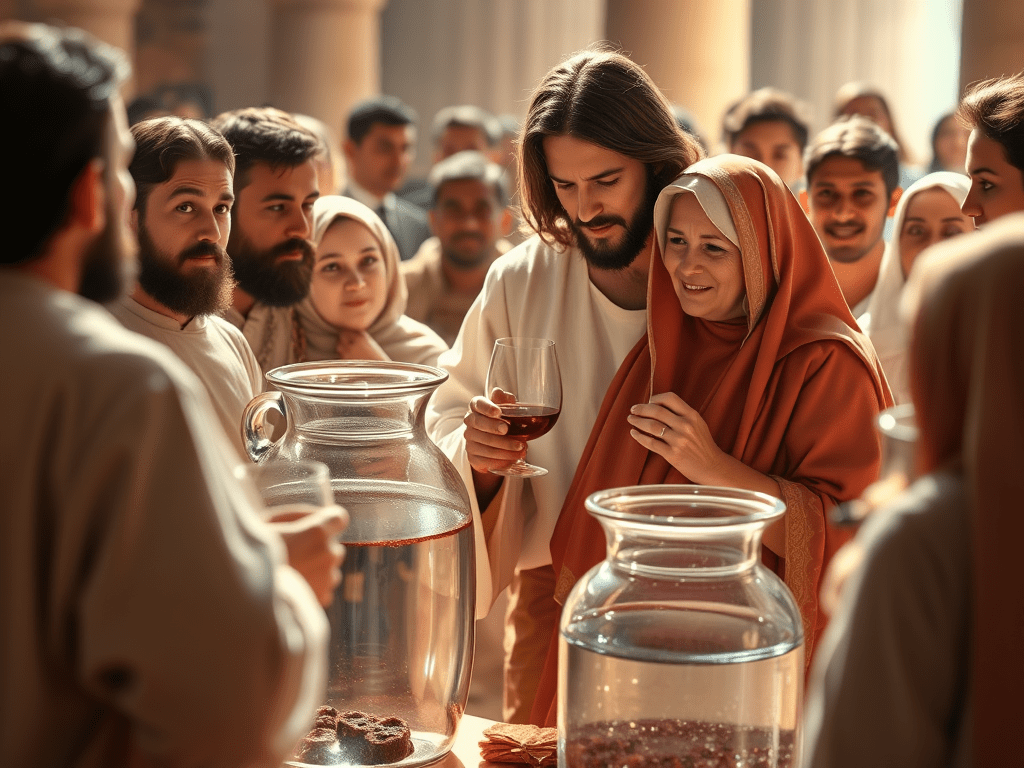
Jesus instructed the servants to fill six large stone jars with water. When they drew from the jars, the water had turned into wine—not just any wine, but the finest quality. The master of the feast was astonished, noting that the best wine is usually served first, but in this case, it had been saved for last.

The Deeper Significance of the Miracle

The miracle at the wedding in Cana is rich with symbolism and theological meaning. Here are some key aspects of its significance:

1. Transformation and Renewal

Jesus’ act of turning water into wine represents transformation—both physical and spiritual. Water, often associated with purification in Jewish tradition, is changed into wine, a symbol of joy and abundance. This reflects the transformative power of Jesus’ ministry, turning the ordinary into the extraordinary.

2. The New Covenant

Wine is frequently used in biblical texts to represent the new covenant between God and His people. By performing this miracle, Jesus foreshadows the new relationship He will establish through His sacrifice, replacing old religious practices with a new era of grace and salvation.

3. Abundance and Celebration

The quality of the wine produced was superior to what had been served earlier, emphasizing God’s generosity. This miracle highlights the theme of divine abundance—God provides not just enough, but the best, reinforcing the idea that life with Christ is filled with joy and fulfillment.

4. Faith and Obedience

Mary’s role in the miracle is significant. She instructs the servants to follow Jesus’ commands, demonstrating faith and obedience. The servants, though unaware of the full scope of the miracle, obeyed and witnessed firsthand the power of Jesus. This teaches that faith often requires trust before understanding.

5. A Foreshadowing of the Wedding Feast of the Lamb

Biblical scholars often link this event to the ultimate wedding feast described in Revelation—the union of Christ and His followers. The wedding setting itself is symbolic of the relationship between God and His people, reinforcing the idea that Jesus is the divine bridegroom.

This miracle is more than just an act of kindness—it is a profound statement about Jesus’ mission and the transformation He brings to the world.

Current Archaeological Insights

Recent discoveries suggest that the true location of this miracle may have been Khirbet Qana, rather than the traditionally accepted site of Kafr Kanna2. Archaeologists have uncovered an underground Christian worship site with inscriptions referencing Jesus, as well as stone jars similar to those described in the Gospel.

The first miracle of Jesus remains a powerful testament to His divine nature and His ability to bring transformation—not just to water, but to lives.

A Reflection on Romans 12:2

Transforming Through Renewal

Romans 12:2 is a verse that carries a powerful and uplifting message, offering a roadmap for personal and spiritual transformation. It reads:

“Do not conform to the pattern of this world, but be transformed by the renewing of your mind. Then you will be able to test and approve what God’s will is—his good, pleasing and perfect will.” (NIV)

This verse is a beacon of hope, calling us to rise above the noise of the world and embrace a life of purpose and renewal. Let’s dive into its profound wisdom and discover how it can inspire us to live boldly and authentically.


Breaking Free to Live Freely

“Do not conform to the pattern of this world” is a call to courage. It invites us to step away from the pressures and expectations that often weigh us down. The world may tell us to chase after fleeting success, to fit into molds that don’t reflect who we truly are, or to prioritize things that leave us feeling empty. But this verse reminds us that we are not bound by these patterns.

Instead, we are invited to live freely—free from comparison, free from fear, and free to embrace the unique purpose God has for each of us. This freedom is not about rejecting the world but about choosing to live with integrity, love, and faith, even when it feels countercultural.


The Beauty of Transformation

The heart of this verse lies in the words, “be transformed by the renewing of your mind.” Transformation is a beautiful and ongoing process. It’s not about perfection but about progress—about allowing God to work within us, shaping our thoughts and hearts to reflect His love and wisdom.

This renewal is a daily act of surrender and trust. Through prayer, reflection, and immersing ourselves in God’s Word, we open our minds to His truth. As we do, we begin to see ourselves and the world through His eyes. This transformation empowers us to live with clarity, purpose, and joy, even in the midst of life’s challenges.


Discovering the Path of Purpose

The verse concludes with a promise: “Then you will be able to test and approve what God’s will is—his good, pleasing and perfect will.” What an inspiring assurance! When we allow our minds to be renewed, we gain the ability to discern God’s will—a will that is always good, always pleasing, and always perfect.

This doesn’t mean life will be without uncertainty, but it does mean we can walk forward with confidence, knowing that God’s plans for us are rooted in love and wisdom. By aligning ourselves with His will, we find a deeper sense of fulfillment and peace, even when the journey takes unexpected turns.


Embracing Romans 12:2 in Everyday Life

How can we live out the transformative power of Romans 12:2? Here are some steps to inspire your journey:

  1. Pause and Realign: Take moments to reflect on what’s shaping your life. Are your choices and thoughts drawing you closer to God’s purpose?
  2. Renew Your Spirit Daily: Make time for practices that nourish your soul—prayer, Scripture, or simply moments of stillness. Let these moments refresh and inspire you.
  3. Choose Boldly: Live with intention, making choices that reflect your faith and values. Even small, consistent steps can lead to extraordinary transformation.
  4. Trust the Process: Remember, transformation is a journey, not a destination. Be patient with yourself and trust that God is working in and through you.

Romans 12:2 is a verse of hope, courage, and inspiration. It reminds us that we are not defined by the world’s expectations but by God’s love and purpose for us. As we embrace this call to renewal, we not only transform our own lives but also become a source of light and encouragement to those around us. Let this verse inspire you to step boldly into the life God has designed for you—a life of freedom, purpose, and unshakable joy.

Where to Start: A Bible Reading Guide for New Christians

Beginning your journey with the Bible can feel overwhelming—66 books, different genres, and thousands of years of history. But don’t worry! The key is to start with a strong foundation and build from there.

Step 1: Begin with Jesus – The Gospels

The heart of Christianity is Jesus Christ, so it makes sense to start with His life and teachings. The Gospels (Matthew, Mark, Luke, and John) provide a firsthand account of His ministry, miracles, and sacrifice.

  • John – A great introduction to Jesus’ identity and His love for humanity.
  • Mark – The shortest Gospel, offering a fast-paced narrative of Jesus’ life.
  • Matthew & Luke – These books provide more details, including Jesus’ teachings and parables.

Step 2: Learn About the Early Church – Acts

After understanding Jesus, the next step is seeing how His followers spread the Gospel. Acts tells the story of the early church, the work of the Holy Spirit, and the mission of the apostles.

Step 3: Understand Christian Beliefs – Romans & Other Epistles

Paul’s letters (Epistles) explain Christian doctrine, faith, and how to live as a believer.

  • Romans – A deep dive into salvation, grace, and righteousness.
  • Ephesians & Philippians – Encouragement for Christian living.
  • James – Practical wisdom for daily life.

Step 4: Explore the Old Testament – Genesis & Psalms

Once you have a foundation in the New Testament, the Old Testament provides historical context and wisdom.

  • Genesis – The beginning of creation, humanity, and God’s covenant.
  • Psalms – A collection of prayers and songs that express emotions and reliance on God.
  • Proverbs – Practical wisdom for daily life.

Step 5: Dive Deeper – Prophets & Revelation

Once you’re comfortable, explore books like Isaiah (prophecies about Jesus) and Revelation (God’s ultimate plan for the world).

Final Thoughts

Reading the Bible is a journey, not a race. Take your time, pray for understanding, and let God’s Word transform your heart.

For more study and understanding check out the books from Grow Stronger Roots on Amazon

Grow Stronger Roots

Aiding the new believer in their walk with Christ

Skip to content ↓