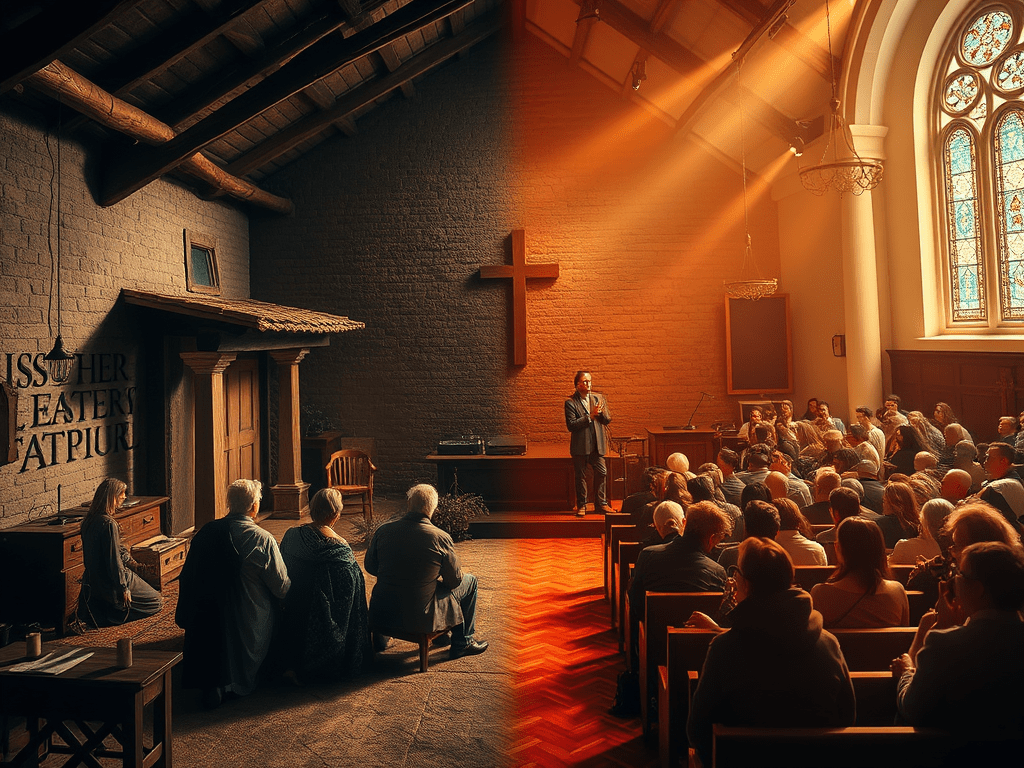
The article explores the continuity and change between the early church and modern Christianity, highlighting similarities in core teachings and mission while addressing differences in worship style, community dynamics, and church structure. It emphasizes the need for contemporary believers to retain the essence of their faith amid evolving cultural contexts without romanticizing the past.
Category Archives: Worship
Stephen’s Diatribe in Acts 7: Why His Words Still Shake Me Today
Acts 7 deeply resonates with the author, named Stephen, reflecting on his spiritual journey shaped by his namesake. Stephen’s bold speech highlights Israel’s resistance to God’s messengers, challenges views on the Temple, and confronts hypocrisy. His martyrdom catalyzes early church expansion, reminding believers of faith’s transformative power beyond comfort zones.
Starting the New Year Luke 9:22–25: What This Passage Is Teaching Me Right Now

As the new year begins, the author reflects on Luke 9:22–25, emphasizing honesty, daily commitment, and reordering priorities. Instead of self-improvement, the focus shifts to following Jesus and aligning with His purpose. This year is framed as a journey of discipleship, highlighting the importance of soul over worldly gains.
Embrace Gratitude: A Biblical Guide to Spiritual Joy

Gratitude is essential to a believer’s life, as it aligns the heart with God’s will and rewires one’s perspective. It protects the mind, deepens worship, strengthens faith, transforms relationships, and enhances spiritual awareness. Practicing thankfulness through prayer, journaling, and acknowledging God’s goodness fosters a richer connection with Him.
The Decline and Recent Stabilization of Church Attendance in America: A Five-Decade Overview

Over the past fifty years, church attendance in the U.S. has declined significantly, especially since the 1990s. While recent data indicates a potential stabilization, younger generations show increased interest in attending. Factors driving this change include cultural shifts and the rise of the religiously unaffiliated. The future remains uncertain as churches adapt to new social dynamics.
The Will of God Revealed at Christmas
This Christmas season, the focus is on the birth of Jesus Christ, embodying God’s will for mercy and salvation. The reflections emphasize the significance of His coming, as foretold by prophets, and highlight the purpose of Jesus’ life to fulfill the Father’s will. Celebrating this gift reminds us to align with God’s will for eternal life.
“I Have Come”: Exploring Jesus’ Mission in the New Testament

The Christmas season reminds us of God’s immense love through the gift of His Son, emphasizing hope, peace, and salvation. While celebrating, we should remember Jesus’ mission as expressed in the New Testament, which includes fulfilling the law, serving others, and offering abundant life, inviting us to embrace His purpose fully.
What God Wants for Christmas – A Personal Reflection

I just heard this song for the first time on the radio this morning and it really got me to think……..What God Wants for Christmas by Darius Rucker. As I listened to Darius Rucker’s song “What God Wants for Christmas,” I found myself pausing in the middle of the holiday rush. The lyrics remind meContinue reading “What God Wants for Christmas – A Personal Reflection”
Embracing Unfailing Love and Forgiveness: Lessons from the Book of Hosea

The book of Hosea illustrates God’s enduring love and forgiveness, juxtaposed with Israel’s spiritual infidelity. Through Hosea’s life, we learn about divine compassion and mercy, highlighting God’s call for repentance and restoration. This narrative invites personal reflection on grace, urging us to return to God and embody His unwavering love.
Small Group Guide: Manifesting Miracles: A Christian Perspective on the Law of Attraction

The content emphasizes the integration of the Law of Attraction with Christian principles, urging believers to align their desires with God’s will through faith and prayer. It outlines a session structure that includes prayer, icebreakers, Bible exploration, group reflection, and encouragement, focusing on faith, the power of words, and trusting God for miracles.
 Grow Stronger Roots