
Christianity is distinct for its belief in Jesus Christ as the Son of God and Savior, its emphasis on grace for salvation rather than works, and the significance of the crucifixion and resurrection. The Bible serves as divine revelation, promoting a personal relationship with God while encouraging global evangelism.
Category Archives: Encouragement
J.D. Rockefeller transformed American healthcare…

In 1910, Rockefeller financed the Flexner Report, which transformed medical education by promoting pharmaceutical-centric practices and marginalizing alternative medicine like homeopathy and naturopathy. This shift established “Rockefeller medicine,” prioritizing drug-based treatments, consolidating allopathic medicine’s dominance, and leading to a healthcare system focused on pharmaceuticals rather than prevention and holistic approaches.
Faith, Function, and the Future of Healing: My Journey Toward Biblical Wellness Through Holistic Medicine

The author emphasizes the value of holistic healing through faith and natural foods, referencing Biblical wisdom and personal experiences. They detail their family’s transition to a Carnivore diet, avoiding traditional medicine and focusing on natural therapies like ozone treatment. Their upcoming book will explore these concepts further, aiming to provide insight into health aligned with God’s design.
Psalm 10: A Journey from Lament to Trust
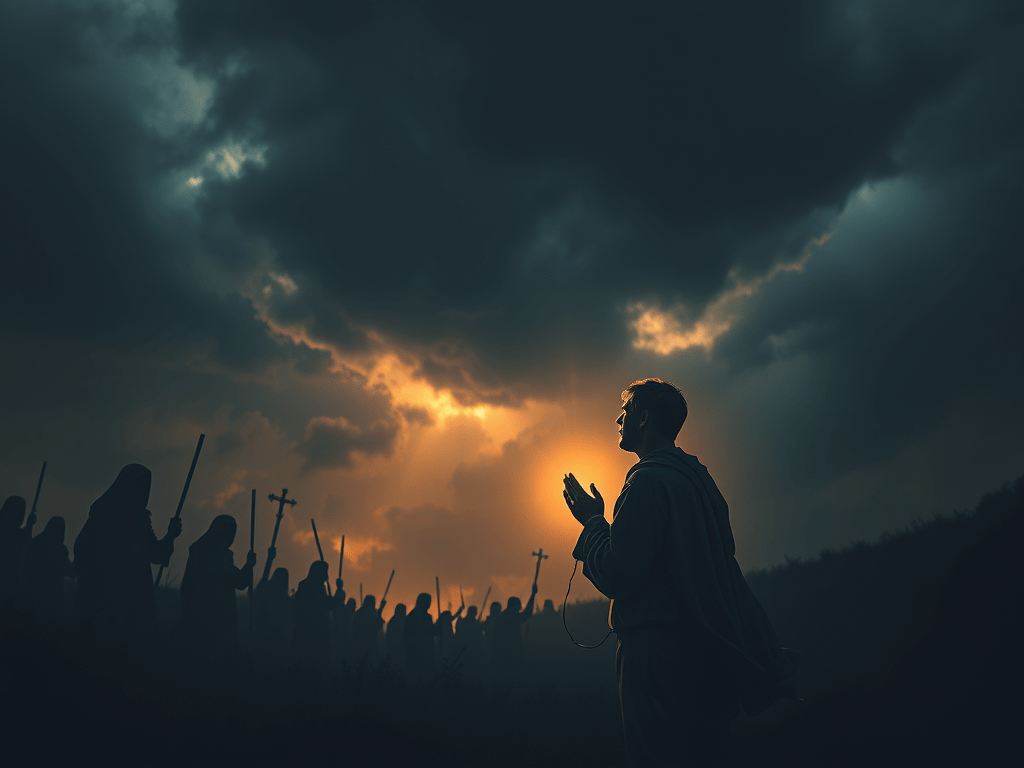
Psalm 10 expresses a journey from anguish over God’s perceived absence in times of trouble to a confident plea for justice and assurance in His eternal kingship. The psalmist laments the oppression of the wicked and urges believers to be honest in their grief while trusting that God hears their cries and ultimately defends the oppressed.
Small Group Study: Christianity and the Occult

This study aims to enhance biblical discernment among adult Christians regarding the occult, focusing on Christ as the ultimate truth source. Over four weeks, participants will engage in scripture readings, discussions, and personal reflections, exploring themes like God’s sovereignty, grace, and practical responses to occult practices, fostering faith and genuine understanding.
Understanding the Divide: Christianity and the Occult
The author reflects on their teenage exploration of the occult, ultimately recognizing its dangers in contrast to Christianity’s teachings. Christianity emphasizes absolute truth, submission to God’s authority, and salvation through grace, while the occult promotes subjective knowledge and self-deification. Believers are urged to reject occult practices and embrace biblical truth for spiritual fulfillment and eternal life.
Small Group Study: The Power Trio of Paul

The study of Galatians, Romans, and Ephesians highlights freedom, foundation, and fulfillment within the Gospel. Participants will explore grace, faith, and identity in Christ through discussions, activities, and prayer. Each week focuses on key passages, essential themes, and personal reflections, aiming for growth in understanding and unity in the Church.
The Power Trio of Paul: Galatians, Romans, and Ephesians
Paul’s letters to the Galatians, Romans, and Ephesians form a theological triad essential to Christian theology. Galatians advocates for freedom in Christ, Romans presents a systematic blueprint of salvation, and Ephesians emphasizes unity within the Church. Together, they deepen understanding of grace, faith, and divine love, shaping believers today.
Faith-Filled Words: Create Your Reality

Words are powerful spiritual instruments that shape realities and express faith. Drawing from biblical examples, the content emphasizes the creative potential of our speech, urging readers to plant positive, faith-filled words while renewing their inner dialogue. Ultimately, it encourages speaking life and truth to influence both personal and external circumstances.
Post 6: Apocalyptic Thinking and the Psychology of Doom

Apocalyptic narratives, once confined to myths, now permeate modern culture, influencing thoughts and behaviors amidst tangible global risks like climate change and pandemics. This blend of ancient prophecy and present uncertainties drives societal responses, shaping economic markets and cultural practices. Ultimately, these scenarios fulfill psychological needs for meaning and agency in uncertainty.
 Grow Stronger Roots