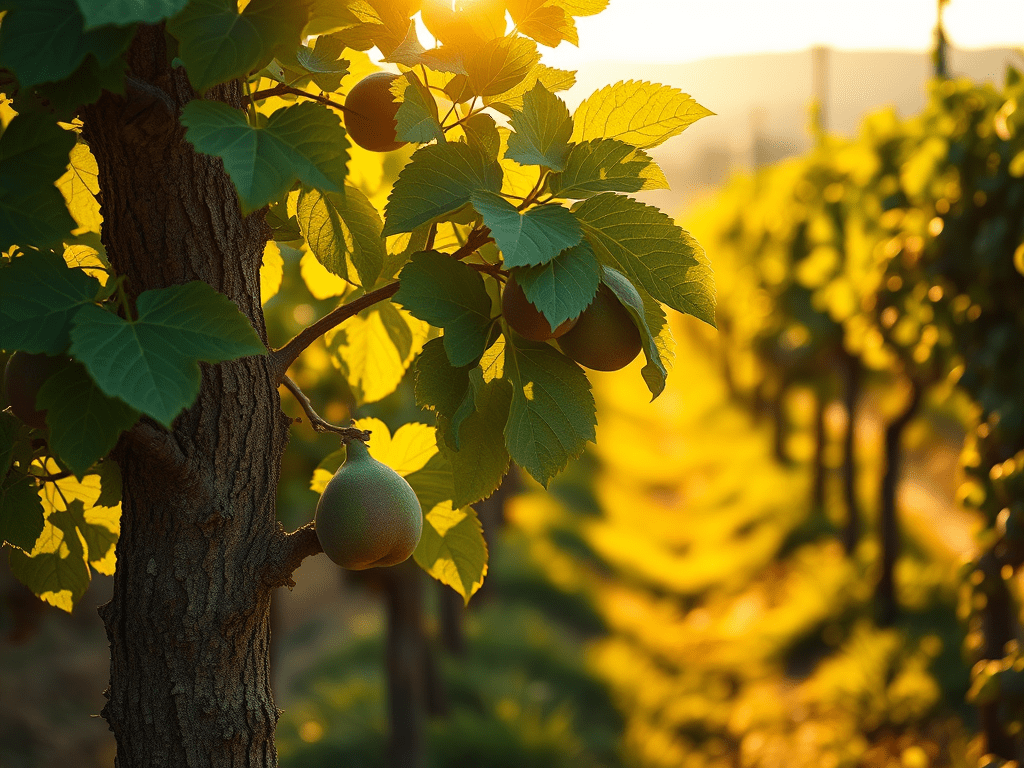
“He spake also this parable; A certain man had a fig tree planted in his vineyard…”—with just these few words, Jesus opens a window into the heart of God: His holy expectations, His righteous judgment, and His astonishing patience toward barren, fruitless lives.
The parable in its setting
Luke places this parable immediately after Jesus warns His hearers that unless they repent, they will all likewise perish (Luke 13:1–5). It is not a quaint farming story; it is an urgent call to examine our hearts before God.
The passage reads in the KJV:
- “He spake also this parable; A certain man had a fig tree planted in his vineyard; and he came and sought fruit thereon, and found none.” (Luke 13:6, KJV)
- “Then said he unto the dresser of his vineyard, Behold, these three years I come seeking fruit on this fig tree, and find none: cut it down; why cumbereth it the ground?” (Luke 13:7, KJV)
- “And he answering said unto him, Lord, let it alone this year also, till I shall dig about it, and dung it:” (Luke 13:8, KJV)
- “And if it bear fruit, well: and if not, then after that thou shalt cut it down.” (Luke 13:9, KJV)
In these four verses, Jesus sketches a drama between an owner, a fig tree, and a patient vinedresser, and through them He speaks to Israel—and to every professing believer today.
A planted tree and a gracious God
First, notice that the fig tree is “planted in his vineyard” (Luke 13:6). This tree is not wild; it did not spring up by accident on the margins of a field. It has been intentionally planted in a privileged place, in cultivated soil, under the care of a skilled vinedresser.
In Scripture, a vineyard often symbolizes God’s people, especially Israel, whom He chose, planted, and tended with great care (compare Isaiah 5:1–7). A fig tree in the vineyard therefore pictures someone who lives under the special privileges of God’s grace:
- You have heard the gospel.
- You have access to Scripture.
- You sit under preaching and teaching.
- You have been surrounded by Christian influence and prayer.
To be “planted in his vineyard” is to live under the sunshine of God’s mercy, with every opportunity to grow in grace and godliness. It is a mark of favor, not of judgment.
The owner’s search and the seriousness of fruitlessness
The owner “came and sought fruit thereon, and found none” (Luke 13:6). This is repeated in verse 7: “Behold, these three years I come seeking fruit on this fig tree, and find none.” The emphasis falls on His expectation and His repeated disappointment.
Fruit in Scripture is the outward evidence of an inward reality:
- The fruit of repentance—turning from sin to God.
- The fruit of the Spirit—love, joy, peace, longsuffering, gentleness, goodness, faith, meekness, temperance (Galatians 5:22–23).
- The fruit of obedience—a life increasingly shaped by the will of God.
The owner’s question, “why cumbereth it the ground?” (Luke 13:7), is searching. The barren tree is not neutral; it is not merely “non-productive,” it is using up space, water, and nutrients that could nourish fruitful plants. Spiritually, a profession of faith with no fruit can actually hinder others, harden observers, and bring dishonor to God’s name.
This is sobering for anyone content with having a Christian label but no living walk with Christ. A tree that never bears fruit is a contradiction to its purpose. So is a life claiming to belong to God yet stubbornly resisting His transforming work.
The vinedresser’s plea and the patience of Christ
At this point, the story could end in swift judgment: “Cut it down.” But a new voice speaks: “And he answering said unto him, Lord, let it alone this year also, till I shall dig about it, and dung it” (Luke 13:8).
Most interpreters see in the vinedresser a picture of Christ Himself, our merciful Mediator. He does not deny the justice of cutting the tree down. He does not claim the tree is already fruitful. Instead, He pleads for time and promises extra care:
- “let it alone this year also” – a stay of execution, a season of mercy.
- “till I shall dig about it” – loosening the hardened soil, breaking up what is compacted around the roots.
- “and dung it” – providing rich nourishment, what the tree truly needs to thrive.
In your life, this “digging” may look like conviction of sin, circumstances that break your self-reliance, or trials that expose shallow roots. The “dung” is the rich supply of God’s Word, the gospel, the ministry of the Spirit, and the influences He brings—preaching, fellowship, discipline—to feed your soul.
Notice: patience is not permission to remain barren. It is an invitation to respond. The delay of judgment is not indifference; it is mercy with an expiration date.
One more year: the urgency of now
The vinedresser proposes a clear “if”: “And if it bear fruit, well: and if not, then after that thou shalt cut it down” (Luke 13:9). The story ends without telling us whether the tree eventually bore fruit. That silence is deliberate. Jesus leaves the ending open so that we write it with our response.
This “one more year” frames time itself differently:
- Every new day is another stroke of mercy on the calendar.
- Every sermon you hear, every Bible passage you read, every reminder of eternity is the vinedresser digging and fertilizing.
- Every conviction you feel is a sign that God has not yet “cut it down.”
But the “after that” is just as real as the “this year also.” Continued refusal to repent and bear fruit ends in judgment. Other passages echo this sober reality: unfruitful branches are cast forth and burned (compare John 15:6). Grace does not mean God will forever overlook fruitlessness; it means that now is the accepted time, now is the day of salvation.
So the parable presses a personal, searching question:
If God has given you another year, another Sunday, another breath, what will you do with His patience?
Living the parable today
How do we respond to this parable in daily life?
- Examine yourself honestly.
Do not rest in being “planted in the vineyard”—in church attendance, Christian culture, or a religious past—without evidence of spiritual fruit. Ask: Is there real repentance, growing love for Christ, increasing obedience? - Receive Christ’s patient work.
If the soil around your heart feels disturbed, if God is digging and turning things over, do not resist. That disruption is part of His mercy, preparing you for growth. - Embrace repentance as a lifestyle.
In the context of Luke 13, the call is not to curiosity about others’ sins but to a continual turning from our own. Repentance is not a one-time event but a posture of heart that keeps the tree rooted in grace. - Rest in Christ, not in your fruit.
Fruit is necessary, but it is not the root of your acceptance with God; Christ is. The same Savior who pleads “let it alone this year also” is the One who will, by His Spirit, produce fruit in those who abide in Him. - Feel the weight of “after that.”
God’s patience is vast but not endless. To delay responding to Him is to presume upon mercy. The parable calls us to respond today, not someday.
In the end, the parable of the barren fig tree is both warning and invitation. The warning: a fruitless life under great spiritual privilege will not be spared forever. The invitation: the Lord of the vineyard has not yet issued the final command. The vinedresser still intercedes, still digs, still nourishes.
“He that hath ears to hear, let him hear.”
Following our study in the Parables of Jesus?
Discovering the Path of Salvation series by Stephen Luckett
Discover more from Grow Stronger Roots
Subscribe to get the latest posts sent to your email.

 Grow Stronger Roots
One thought on “The Urgency of Bearing Fruit: Insights from Luke 13:6-9”