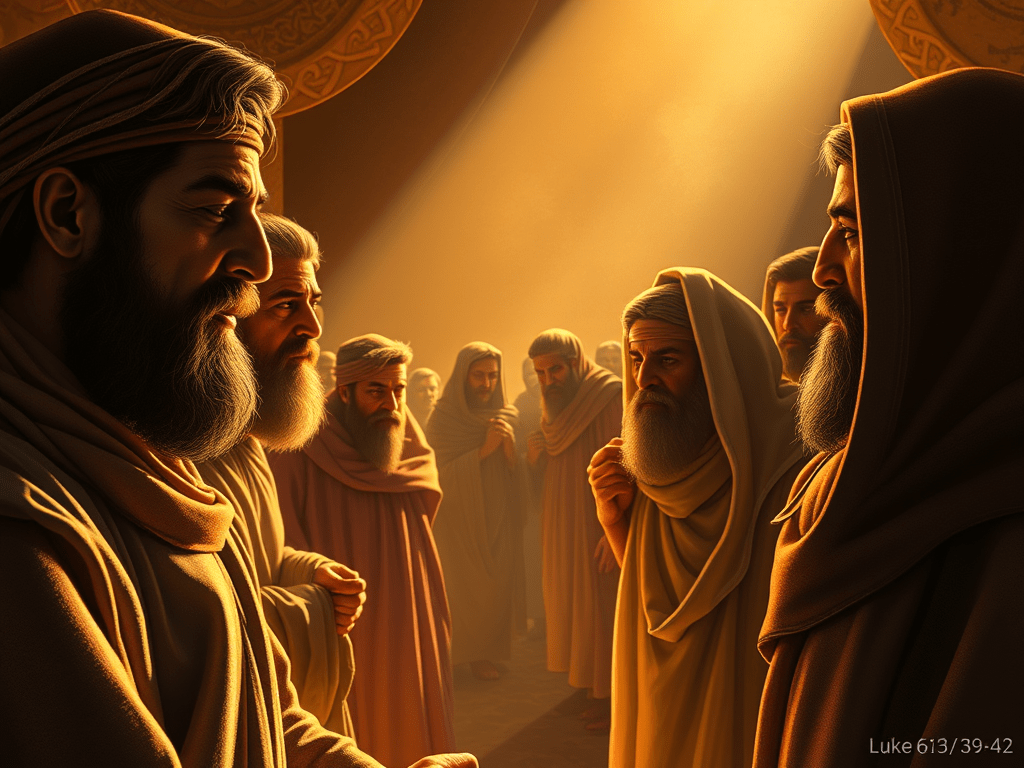
“And he spake a parable unto them…”—in Luke 6:39–42, Jesus exposes the danger of blind leadership and hypocritical judgment, and calls His disciples to humble self‑examination before they correct others.
The Parable Text (KJV)
“And he spake a parable unto them, Can the blind lead the blind? shall they not both fall into the ditch? The disciple is not above his master: but every one that is perfect shall be as his master. And why beholdest thou the mote that is in thy brother’s eye, but perceivest not the beam that is in thine own eye? Either how canst thou say to thy brother, Brother, let me pull out the mote that is in thine eye, when thou thyself beholdest not the beam that is in thine own eye? Thou hypocrite, cast out first the beam out of thine own eye, and then shalt thou see clearly to pull out the mote that is in thy brother’s eye.” (Luke 6:39–42, KJV)
Blind Guides and Fallen Followers
Jesus begins with a vivid question: “Can the blind lead the blind? shall they not both fall into the ditch?” (Luke 6:39, KJV). Spiritual blindness in leaders guarantees disaster not only for them but also for those who follow them. When those who lack repentance, humility, and truth take the role of guides, the whole community is put at risk, because error and pride multiply down the line.
Then Jesus adds, “The disciple is not above his master: but every one that is perfect shall be as his master.” (Luke 6:40, KJV). Disciples inevitably become like the teachers they imitate, so choosing whom we follow is a deeply spiritual decision, not a casual preference. Christ’s words invite us to measure every human voice against His own and to desire to be formed into His likeness, not into the image of a blind guide.
The Mote and the Beam
Next, the Lord turns from leadership to personal relationships: “And why beholdest thou the mote that is in thy brother’s eye, but perceivest not the beam that is in thine own eye?” (Luke 6:41, KJV). A “mote” is a tiny speck, while a “beam” is a large piece of wood; the contrast is intentionally absurd, even humorous. Jesus pictures a person obsessed with the small fault of another while completely blind to their own massive issue.
He presses further: “Either how canst thou say to thy brother, Brother, let me pull out the mote that is in thine eye, when thou thyself beholdest not the beam that is in thine own eye?” (Luke 6:42, KJV). The impulse to “fix” someone else’s problem can mask a deep unwillingness to face our own sin. Jesus names this for what it is: “Thou hypocrite…”—a role‑player, someone putting on a show of concern for holiness without embracing holiness personally.
First Things First: Self‑Examination
Jesus does not say that we should never help others with their “mote,” but that we must start in the right place: “cast out first the beam out of thine own eye, and then shalt thou see clearly to pull out the mote that is in thy brother’s eye.” (Luke 6:42, KJV). Honest self‑examination clears our spiritual vision so that any correction we offer is marked by humility, compassion, and truth. When we have faced our own sin before God, we are less harsh, less proud, and more patient with the weaknesses of others.
This order—first the beam, then the mote—protects the church from harsh, hypocritical judgment that wounds instead of heals. It also guards us from the deception that our greatest spiritual work is managing other people’s behavior, rather than submitting our own hearts to the lordship of Christ.
Living This Parable Today
In a world of opinions, posts, and criticisms, this parable feels painfully current. We easily become “blind guides” when we speak confidently about issues we have not prayed through, studied in Scripture, or surrendered to the Lord in our own lives. Likewise, we quickly see “motes” in the attitudes, politics, parenting, church preferences, or habits of others, while our own pride, anger, or complacency remains unaddressed.
Imagine a believer who constantly points out the lack of love or maturity in their church community, yet refuses to reconcile with a family member or to confess a hidden sin. That person is trying to perform delicate eye‑surgery with a beam still lodged in their own eye. Jesus’ call is not to silence concern for others, but to deepen repentance in ourselves so that any help we offer is gentle, credible, and Christlike.
Luke 6:39–42 ultimately urges us to follow teachers who see clearly, to become disciples who resemble the Master, and to practice a holy sequence: confess our own sin first, then care wisely for our brother’s soul.
Other studies in the parables of the Gospels:
For further study and understanding: Discovering the Path of Salvation series by Stephen Luckett.
Discover more from Grow Stronger Roots
Subscribe to get the latest posts sent to your email.

 Grow Stronger Roots
One thought on “Overcoming Hypocrisy: Jesus’ Lessons on Judgment from Luke 6:39-42”