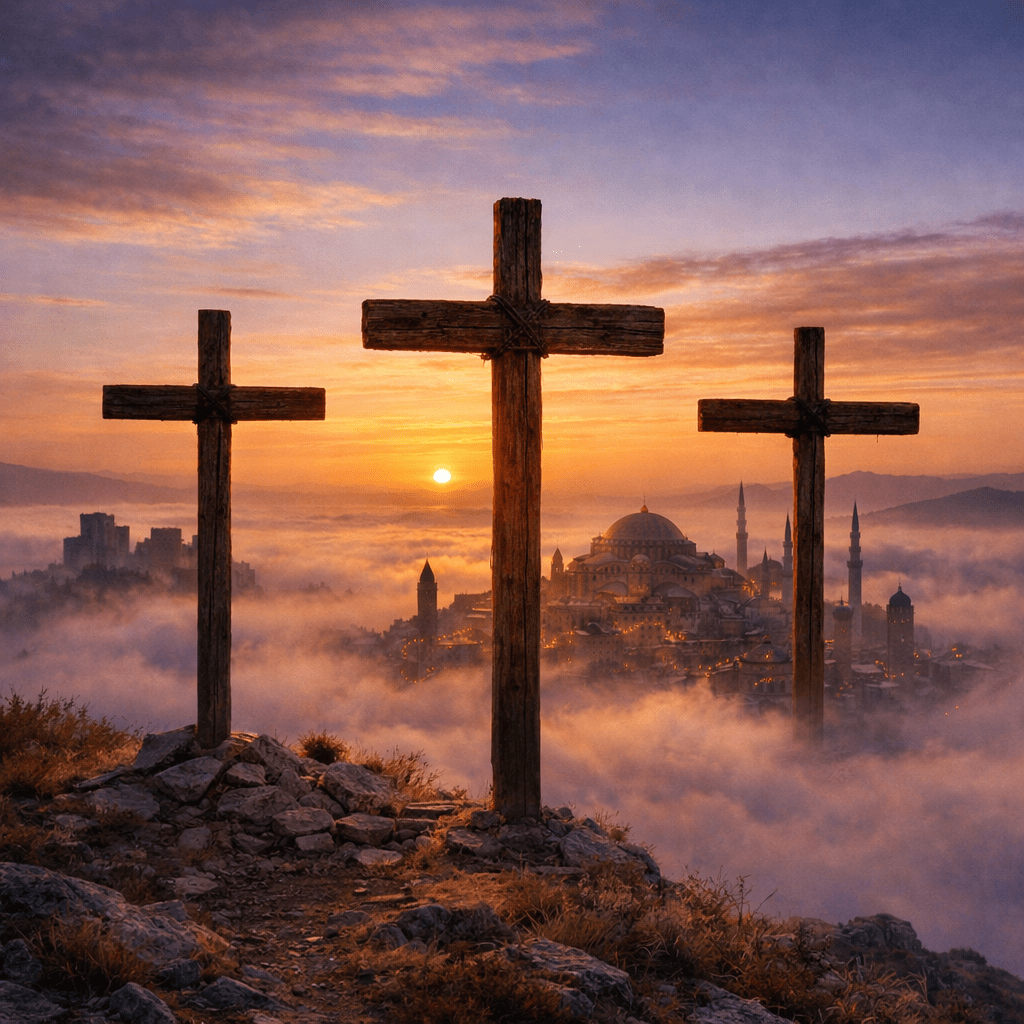
The word tetelestai has always stood out to me as one of the most powerful words in the New Testament. In John 19:30, Jesus says, “It is finished” as he dies on the cross. To me, that short statement carries the weight of both the suffering of the crucifixion and the fulfillment of God’s saving plan.
When I place it in its historic setting, the meaning becomes even richer. Jesus lived and died under Roman rule in the first century, when crucifixion was a public form of execution meant to shame and warn others. From the Roman point of view, the cross was a symbol of defeat and humiliation. But in John’s Gospel, I see the cross presented differently. It is not the end of Jesus’ mission; it is the moment when that mission is completed.
What Tetelestai Means
In Greek, tetelestai comes from the idea of bringing something to completion. I understand it as meaning finished, accomplished, or brought to its intended end. In everyday use, it could describe a task that had been fully completed. That is why I hear in it the meaning, “The work is done.”
Over time, Christian teachers have connected the word with other ideas as well. Some say it carries the sense of a debt being paid in full. Others point to a victory image, as if a battle had been won and the mission achieved. I do not think those are the only possible meanings, but they do fit the larger biblical message of redemption.
Historic Background in John’s Gospel
When I read the Gospel of John, I see that it was written for believers who needed to recognize Jesus not only as a teacher, but as the promised Messiah. John carefully shows that Jesus’ death was not random or accidental. It was the fulfillment of Scripture, the completion of God’s long plan, and the turning point in salvation history.
In the Jewish setting of that time, sacrifice was a familiar reality. The Temple in Jerusalem still stood during Jesus’ lifetime, and offerings were part of worship. Passover also gave special meaning to Jesus’ death, since Christians have long understood him as the true Passover Lamb. In that light, tetelestai sounds less like a cry of exhaustion and more like an announcement that the final sacrifice has been made.
Why the Word Matters
Tetelestai matters to me because it changes how I understand the cross. Rome may have seen crucifixion as punishment, but John presents it as completion. The world saw weakness, but the Gospel reveals victory. Jesus’ final word tells me that the work of rescue, redemption, and reconciliation has reached its goal.
For me, this is not only history but hope. It means salvation does not depend on my effort to finish what Christ already completed. The word points to assurance: the saving work of Jesus is not partial, delayed, or unfinished. It has been accomplished.
A Word That Still Speaks
Even now, tetelestai still speaks with force because it gathers suffering, sacrifice, fulfillment, and victory into one statement. It tells the story of Jesus in a way that is both deeply historical and deeply spiritual. In the shadow of the Roman cross, Jesus declared that the mission given to him by the Father had been completed.
That is why I keep returning to this word. It is not just a translation note. It is a proclamation that the story of the cross is the story of God’s saving purpose brought to completion.
Discovering the Path of Salvation series by Stephen Luckett
Coming Late Spring of 2026: Growing in Grace: Exploring the Parables of Jesus
Discover more from Grow Stronger Roots
Subscribe to get the latest posts sent to your email.

 Grow Stronger Roots