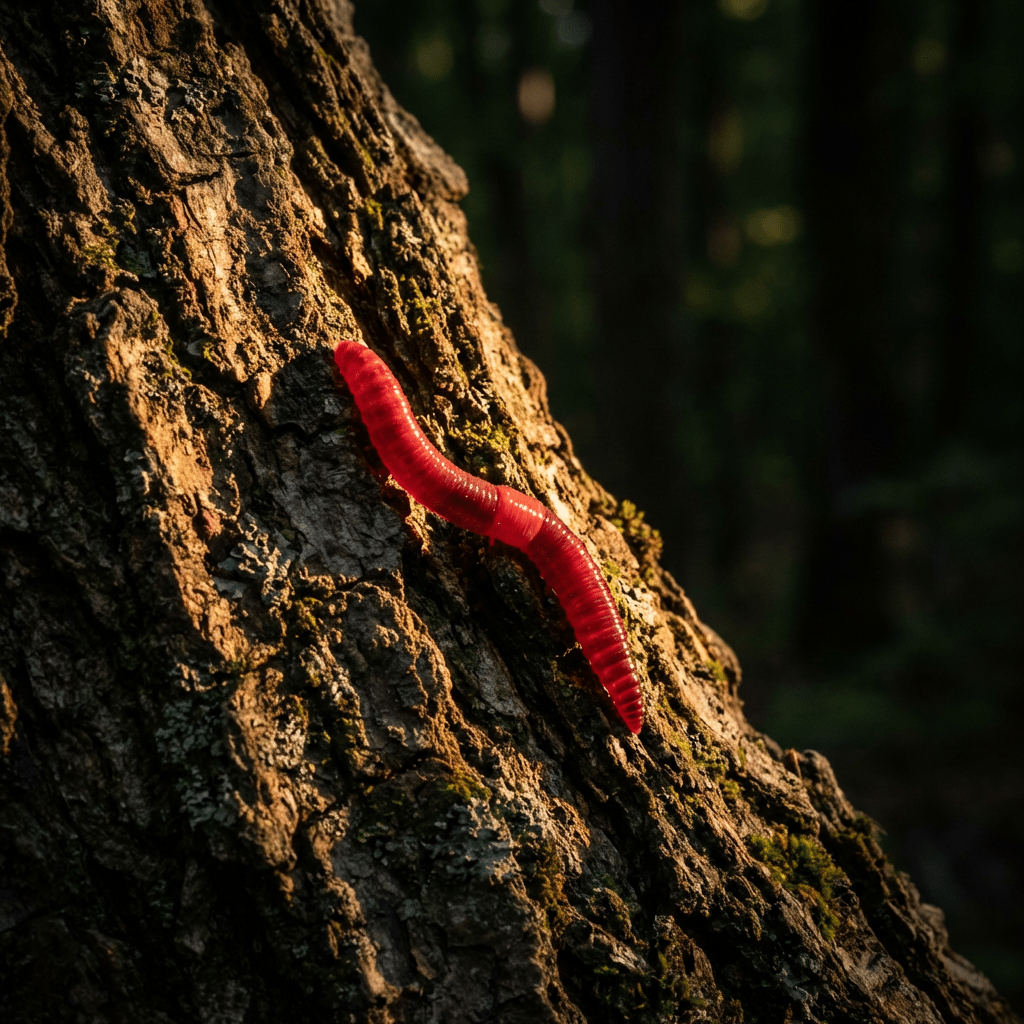
The Crimson Worm and the Gospel Picture
The life cycle of the crimson worm has long fascinated Bible teachers because of the way it appears to mirror key moments in the life of Jesus Christ. While the comparison is a devotional illustration rather than a direct Bible teaching, it offers a vivid picture of sacrifice, blood, and new life. The KJV gives language that helps make the connection clear: “I am a worm, and no man” in Psalm 22:6, and “though your sins be as scarlet, they shall be as white as snow” in Isaiah 1:18.
A Lowly Beginning
Psalm 22 is a prophetic psalm often associated with the suffering of Christ. In verse 6, David writes, “But I am a worm, and no man; a reproach of men, and despised of the people” (Psalm 22:6, KJV). Christians have often seen in that verse a picture of Jesus’ humiliation and suffering, especially since Psalm 22 also includes the cry, “My God, my God, why hast thou forsaken me?” (Psalm 22:1, KJV).
The crimson worm itself is a small, humble creature, which makes it a fitting symbol in this kind of teaching. The comparison begins with humility: Jesus did not come in earthly power, but in lowliness, just as the worm is a creature easily overlooked.
The Wood and the Cross
One of the most striking features of the crimson worm’s life cycle is that the female attaches herself to wood to give life to her offspring. That image naturally calls to mind the cross of Christ, since the New Testament says Jesus bore our sins on the tree: “Who his own self bare our sins in his own body on the tree” (1 Peter 2:24, KJV). Paul also writes that Christ “humbled himself, and became obedient unto death, even the death of the cross” (Philippians 2:8, KJV).
The point of the comparison is not that the worm is identical to Christ, but that its sacrifice-like posture provides an illustration of what Jesus did willingly. As Jesus said, “I lay down my life, that I might take it again” (John 10:17, KJV).
Crimson Blood and Redemption
A central part of the crimson worm illustration is the scarlet color that remains after its death. That red stain has often been connected with blood and sacrifice in Scripture. Hebrews says, “without shedding of blood is no remission” (Hebrews 9:22, KJV), and Revelation describes believers as washed and made clean through Christ’s blood: “Unto him that loved us, and washed us from our sins in his own blood” (Revelation 1:5, KJV).
That is why Isaiah 1:18 is so often linked to this image: “though your sins be as scarlet, they shall be as white as snow; though they be red like crimson, they shall be as wool” (Isaiah 1:18, KJV). The crimson worm becomes an illustration of how Christ’s sacrifice covers sin and brings cleansing.
Three Days and New Life
Another reason Christians find this image compelling is the idea of transformation after death. The Bible repeatedly connects Christ’s resurrection with the third day: “that he rose again the third day according to the scriptures” (1 Corinthians 15:4, KJV). Jesus also said, “the Son of man shall be three days and three nights in the heart of the earth” (Matthew 12:40, KJV).
In devotional teaching, the worm’s life cycle is often used to illustrate that after sacrifice comes renewal. In the gospel, the meaning is far greater: Jesus did not remain in the grave, but rose in victory. That is why the resurrection is not just a symbol of hope, but the foundation of Christian faith.
Why the Image Matters
The crimson worm story works best as an educational illustration, not as proof by itself. The real authority is Scripture, and the illustration is valuable only because it helps readers see biblical truths more vividly. The cross, blood, sacrifice, cleansing, and resurrection are all plainly taught in the Bible; the worm image simply gathers those truths into one memorable picture.
Creation often reflects its Creator, and even the smallest creature can point us toward the greatest act of love. As John writes, “Herein is love, not that we loved God, but that he loved us, and sent his Son to be the propitiation for our sins” (1 John 4:10, KJV).
Discovering the Path of Salvation series by Stephen Luckett
Discover more from Grow Stronger Roots
Subscribe to get the latest posts sent to your email.

 Grow Stronger Roots