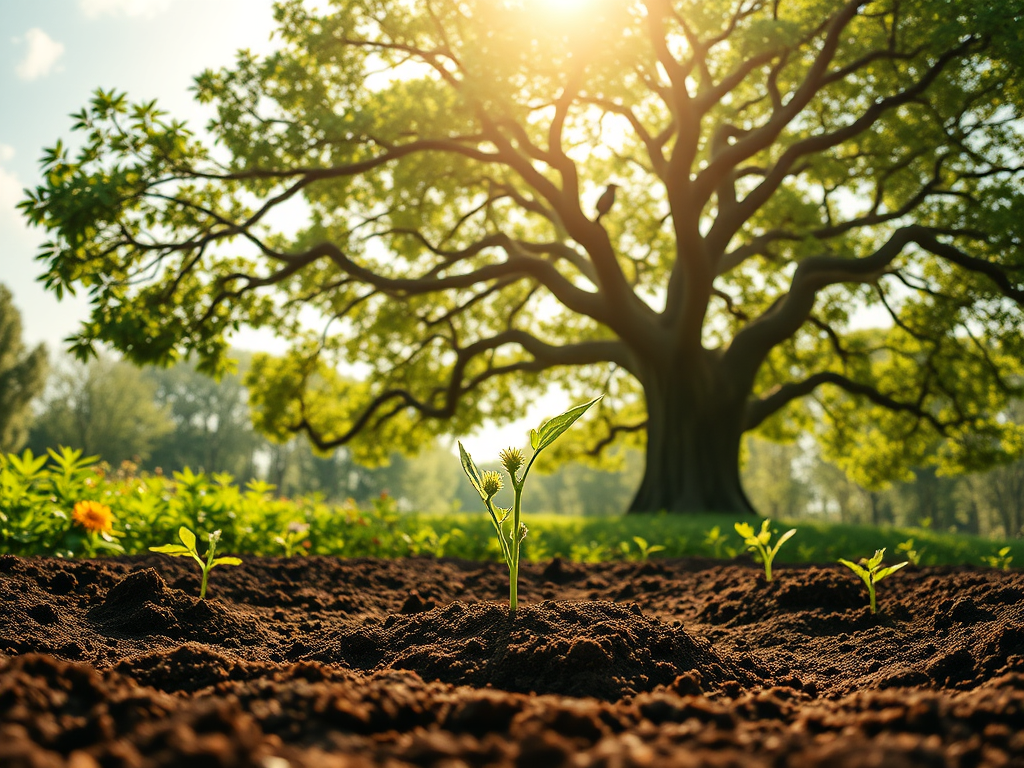
In Luke 13:18–19 (KJV), Jesus declares:
“Then said he, Unto what is the kingdom of God like? and whereunto shall I resemble it? It is like a grain of mustard seed, which a man took, and cast into his garden; and it grew, and waxed a great tree; and the fowls of the air lodged in the branches of it.”
This short parable paints a vivid picture of small beginnings leading to extraordinary results. Within its brevity lies a profound message about how God’s kingdom operates — quietly, gradually, yet powerfully.
Context within Luke’s Gospel
Luke records this parable immediately after Jesus heals a woman bent over for eighteen years (Luke 13:10–17). That miracle, performed on the Sabbath, revealed both God’s compassion and the tension between divine mercy and rigid religiosity. In that context, the parable becomes an answer to the unspoken question: How does the kingdom of God truly come?
Rather than through outward spectacle or political force, the kingdom begins as something almost invisible — an inner work of grace that expands outward.
The Mustard Seed in the Ancient World
The “grain of mustard seed” was well-known in first-century Palestine. It was proverbially tiny, yet the plant could grow into a sprawling shrub, sometimes large enough for birds to perch on. Although technically not a “tree,” Jesus uses hyperbolic language — “waxed a great tree” — to convey the astonishing growth from a minuscule start.
The phrase also resonates with Old Testament imagery. In Ezekiel 17:22–23 (KJV), God says:
“I will also take of the highest branch of the high cedar, and will set it… and it shall bring forth boughs, and bear fruit, and be a goodly cedar: and under it shall dwell all fowl of every wing.”
And in Daniel 4:12 (KJV), the great tree in Nebuchadnezzar’s vision “was fair, and the birds of the heavens dwelt in the boughs thereof.” Both passages describe earthly kingdoms of vast scope. Jesus, however, reverses the imagery: the true kingdom comes not through dominance but through divine grace that grows from humility and faithfulness.
Theological Themes
- Divine initiative and human participation. The man “cast [the seed] into his garden” (Luke 13:19), showing that God allows humanity to join His redeeming work. Yet only God can make the seed live — as Paul writes in 1 Corinthians 3:6 (KJV), “I have planted, Apollos watered; but God gave the increase.”
- Hidden beginnings, revealed power. God’s kingdom often starts invisibly — in quiet faith, in personal repentance, or in communities of compassion — yet its results become unmistakable.
- Certainty of growth. “It grew, and waxed a great tree.” The outcome is sure, not because of human skill but because divine life cannot fail to bear fruit (Philippians 1:6).
- Universal welcome. The “fowls of the air” symbolize people of every nation finding rest in God’s grace, echoing Isaiah 56:7 (KJV): “Mine house shall be called an house of prayer for all people.”
Living Out the Parable
Each follower of Christ is called to plant seeds of faith — small, steady acts of obedience that God uses in ways unseen. Even when progress seems slow or hidden, the parable teaches patience and divine trust. Jesus reminds us that spiritual growth unfolds in God’s time, not ours, as in Mark 4:27 (KJV):
“And should sleep, and rise night and day, and the seed should spring and grow up, he knoweth not how.”
Faith thrives when nurtured with prayer, Scripture, and love; it matures into shelter for others, just as the tree gives refuge to the birds. From a single faithful life can arise encouragement, hope, and transformation for many.
From Seed to Shelter
The mustard seed began as one of the smallest seeds in the garden, yet it became a source of shade and rest. In the same way, what God begins in us — often unseen or fragile — He promises to bring to completion. As Zechariah 4:10 (KJV) declares, “For who hath despised the day of small things?”
A Closing Prayer
Heavenly Father, thank You for teaching us that Your kingdom often begins in small and hidden ways. Give us the faith to trust in Your unseen work and the patience to wait for its fruit. Help us sow seeds of kindness, truth, and love in the soil of everyday life. May our lives become branches where others can find rest and hope through You.
In Jesus’ name, Amen.
Continue the study in the parables of Jesus:
Discovering the Path of Salvation series by Stephen Luckett
Discover more from Grow Stronger Roots
Subscribe to get the latest posts sent to your email.

 Grow Stronger Roots