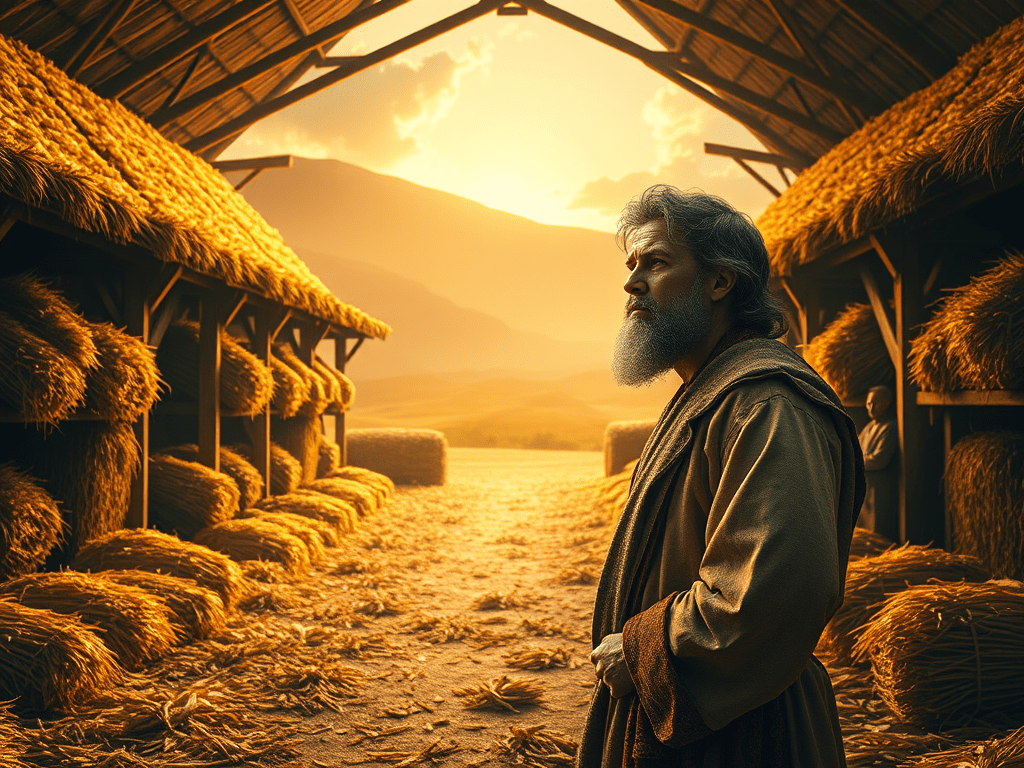
Jesus’ parable of the rich fool in Luke 12:16–21 exposes the danger of living as if life consists in possessions while neglecting eternity. This post will walk through the KJV text and draw out its main lessons.
The Parable in Luke 12
“And he spake a parable unto them, saying, The ground of a certain rich man brought forth plentifully: And he thought within himself, saying, What shall I do, because I have no room where to bestow my fruits? And he said, This will I do: I will pull down my barns, and build greater; and there will I bestow all my fruits and my goods. And I will say to my soul, Soul, thou hast much goods laid up for many years; take thine ease, eat, drink, and be merry. But God said unto him, Thou fool, this night thy soul shall be required of thee: then whose shall those things be, which thou hast provided? So is he that layeth up treasure for himself, and is not rich toward God.” (Luke 12:16–21, KJV)
Jesus tells this story right after warning His listeners to “beware of covetousness,” because a person’s life does not consist in the abundance of the things he possesses (Luke 12:15, KJV).
The Rich Man’s Problem: Not Wealth, but Worship
Notice how Jesus frames the story: “The ground of a certain rich man brought forth plentifully.” The man is already rich, and the abundance comes from the ground, not from his genius—hinting that God is the real giver.
Yet as soon as the harvest comes, the man’s thoughts turn entirely inward:
- “He thought within himself, saying, What shall I do…?”
- “This will I do… I will pull down my barns, and build greater…”
- “There will I bestow all my fruits and my goods.”
His language is saturated with self: my barns, my fruits, my goods, my plans. He never thanks God, never considers others, never asks how he might honor the Lord with what he has. His problem is not that he is rich, but that his riches have become his functional god.
A False Security: “Soul, Thou Hast Much Goods”
The climax of the man’s planning comes in verse 19: “And I will say to my soul, Soul, thou hast much goods laid up for many years; take thine ease, eat, drink, and be merry.”
Several illusions show up here:
- He assumes he has many years.
- He assumes his soul can be satisfied with “much goods.”
- He believes true life is found in ease, pleasure, and comfort—“eat, drink, and be merry.”
He speaks to his soul as if it were just another appetite to be fed with material abundance. He treats eternity as if it can be bought with bigger barns.
God’s Verdict: “Thou Fool”
Into this self-centered monologue, God breaks in: “But God said unto him, Thou fool, this night thy soul shall be required of thee: then whose shall those things be, which thou hast provided?”
Three truths stand out:
- Life is not ours to keep.
“This night thy soul shall be required of thee”—his life is not gently surrendered but required, as if on loan and now called back. - Death exposes ownership.
“Then whose shall those things be, which thou hast provided?” The barns, goods, and grain will all go to someone else; none of it follows him beyond the grave. - God calls this man a fool.
He is not called a fool for being successful, but for planning everything except for meeting God. To ignore eternity while meticulously planning retirement is, in Jesus’ assessment, foolishness.
Jesus then drives the nail home: “So is he that layeth up treasure for himself, and is not rich toward God.” The rich fool is a type—a picture—of anyone who hoards for self but neglects spiritual riches.
“Rich Toward God”: What the Parable Calls Us To
The parable doesn’t condemn planning, storing, or working hard. It exposes:
- Trust in riches instead of God.
- Living for pleasure instead of God’s purposes.
- Investing heavily in this world while investing lightly in eternity.
To be “rich toward God” is to:
- Treasure God above His gifts.
- Use what we have—time, money, skills—for His kingdom and the good of others.
- Measure success not just by what we have, but by who we are in Christ and what we give.
For a modern reader, “pull down my barns, and build greater” might look like endlessly upgrading, accumulating, or saving with no thought for generosity, mission, or obedience. The question is not, “Do I own a barn?” but “Does my barn own me?”
A Heart Check for Today
This parable invites a quiet, honest check of our own hearts:
- Where do my thoughts naturally go when I think about the future—only to finances and comfort, or also to God’s will?
- Do I talk to my soul like the rich man did—promising that more stuff will finally let me “take mine ease”?
- Am I more focused on laying up treasure for myself than on being rich toward God?
Jesus’ story is sober, but not hopeless. It is a merciful warning: life is short, death is certain, and meeting God is unavoidable. Now is the time to reorder our loves, re-center our plans, and ask God to make us truly rich—not just in barns and bank accounts, but in faith, love, and obedience that will matter when “this night” finally comes.
Are you following our study of the parables in the Gospels?
For further study and meaning:
Discovering the Path of Salvation series by Stephen Luckett
Discover more from Grow Stronger Roots
Subscribe to get the latest posts sent to your email.

 Grow Stronger Roots
One thought on “Living Rich Toward God: Insights from Luke 12:16-21”