Continuing in the Parables of Matthew
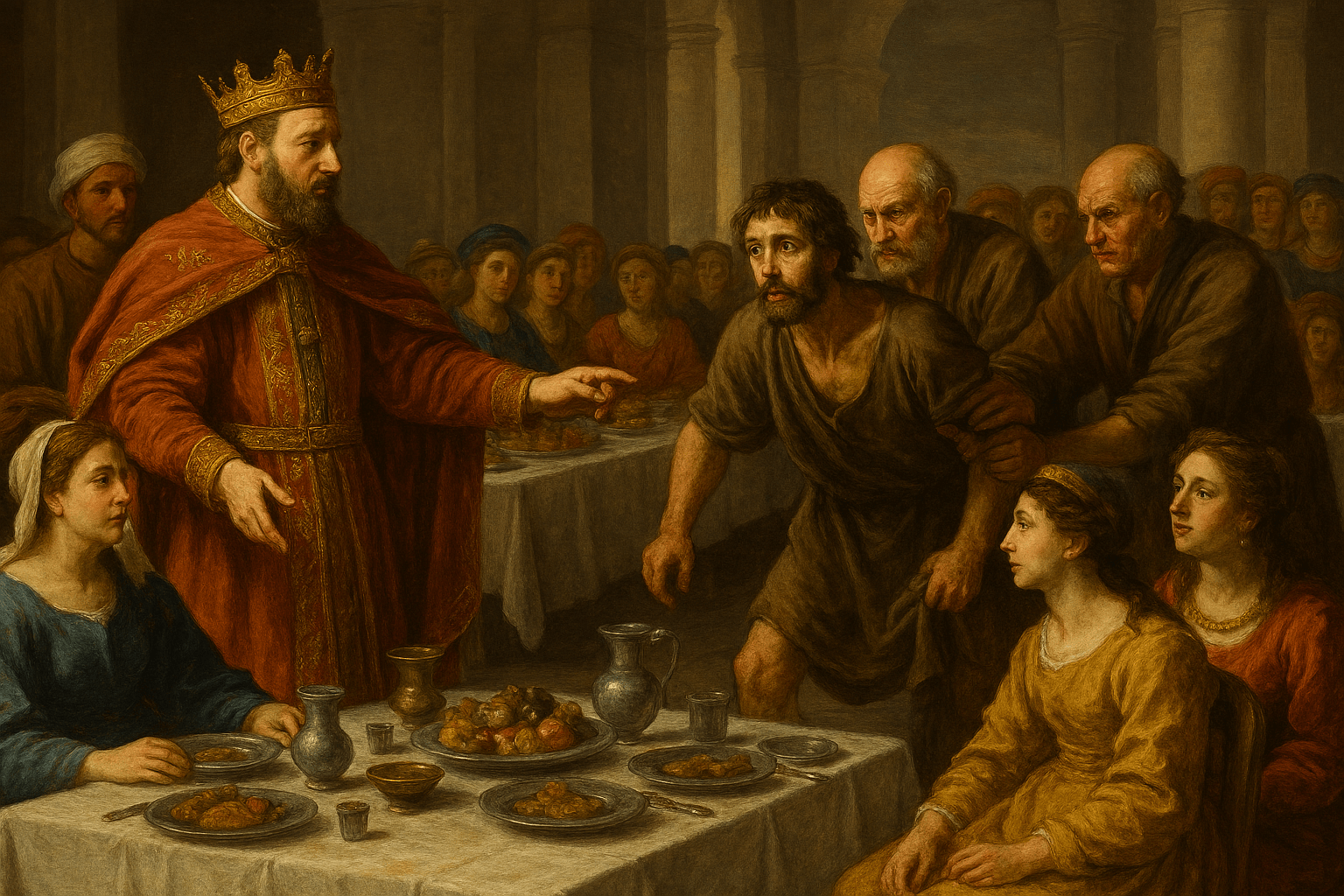
The parable of the Wedding Feast stands as one of Christ’s most vivid portrayals of the kingdom of heaven. Jesus speaks of a king preparing a marriage for his son, sending out invitations, and receiving responses that range from indifference to violence. The story is beautiful, unsettling, and deeply revealing — a portrait of divine grace offered, resisted, and ultimately extended to all who will come.
A Kingdom Compared to a Feast
Jesus begins, “The kingdom of heaven is like unto a certain king, which made a marriage for his son” (Matthew 22:2). This is not a dry lecture about religion — it is a royal celebration overflowing with joy, abundance, and honor. God is not merely calling people to a duty; He is inviting them to a feast.
The Tragedy of Refused Grace
The king sends servants to call the invited guests, but “they would not come” (Matthew 22:3). Their refusal is not due to ignorance but unwillingness. Some are apathetic — “they made light of it” (v. 5). Others are hostile — “the remnant took his servants, and entreated them spitefully, and slew them” (v. 6).
This mirrors Israel’s long history of rejecting the prophets (cf. Matthew 23:37). It also exposes the human heart: people often decline God’s invitation not because it is unclear, but because they prefer their own pursuits.
Judgment and a New Invitation
The king responds with righteous judgment (Matthew 22:7), yet the story does not end in wrath. Instead, the invitation widens:
“Go ye therefore into the highways, and as many as ye shall find, bid to the marriage” (Matthew 22:9).
This is the gospel going out to the nations — the poor, the broken, the unexpected, the unworthy. The hall is filled with guests who never imagined they would be welcomed (v. 10). Grace is lavish, surprising, and far-reaching.
The Wedding Garment: A Call to True Transformation
The parable takes a startling turn when the king notices a man without a wedding garment. He asks, “Friend, how camest thou in hither not having a wedding garment?” (Matthew 22:12).
The garment symbolizes the righteousness God provides — not self-made goodness, but the covering given through Christ (cf. Isaiah 61:10; Revelation 19:8). The man’s silence reveals his presumption. He wanted the feast without the transformation. He wanted the benefits of the kingdom without the King.
The king’s response is severe: “Bind him hand and foot… cast him into outer darkness” (Matthew 22:13). This is not cruelty; it is clarity. God welcomes all, but He does not lower the standards of holiness. The invitation is free, but the garment is required.
“Many Are Called, but Few Are Chosen”
The parable ends with a solemn summary: “For many are called, but few are chosen” (Matthew 22:14). The call goes out broadly — to the highways, the hedges, the unlikely, the uninterested. But only those who respond with genuine faith, clothed in Christ’s righteousness, enter the joy of the kingdom.
Why This Parable Still Speaks Today
- It confronts complacency. God’s invitation is glorious, yet many still “make light of it.”
- It exposes hostility. The human heart resists God’s authority.
- It magnifies grace. The King keeps inviting — even the unlikeliest guests.
- It demands authenticity. A place at the table requires more than attendance; it requires a new heart.
The Wedding Feast is both a celebration and a warning — a reminder that God’s kingdom is a feast of grace, but also a call to be clothed in the righteousness of Christ.
Discovering the Path of Salvation series by Stephen Luckett
Discover more from Grow Stronger Roots
Subscribe to get the latest posts sent to your email.

 Grow Stronger Roots
One thought on “The Wedding Feast: A Royal Invitation and a Sobering Warning (Matthew 22:1–14)”