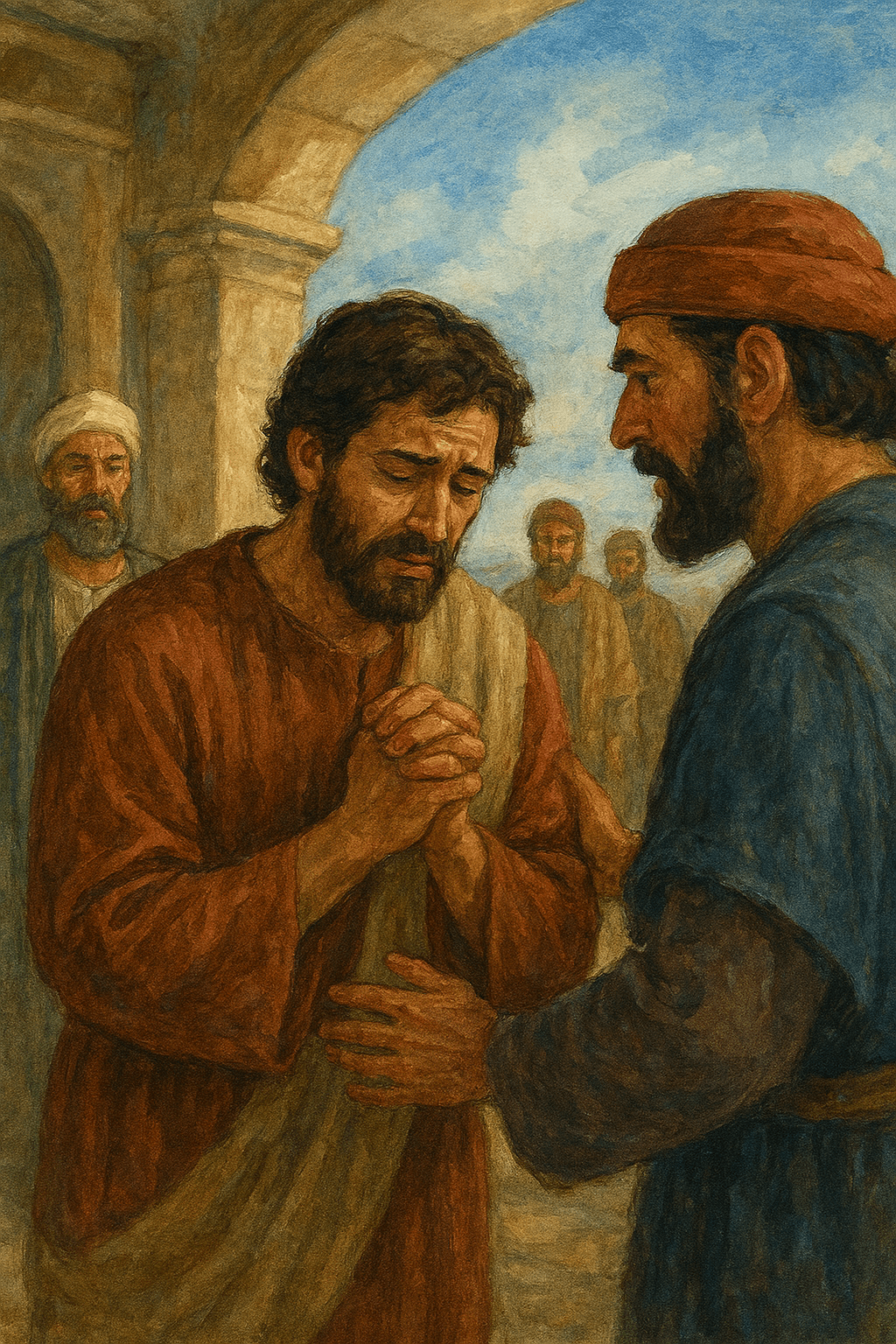
Continuing the study of the Parables of Matthew
As I sat down to reflect on the words of our Lord Jesus in the Gospel according to Saint Matthew, the parable of the unforgiving servant in chapter 18, verses 23 through 35, struck my heart. In the majestic tongue of the King James Bible, it reads thus:
Matthew 18:23–35 (KJV) 23 Therefore is the kingdom of heaven likened unto a certain king, which would take account of his servants. 24 And when he had begun to reckon, one was brought unto him, which owed him ten thousand talents. 25 But forasmuch as he had not to pay, his lord commanded him to be sold, and his wife, and children, and all that he had, and payment to be made. 26 The servant therefore fell down, and worshipped him, saying, Lord, have patience with me, and I will pay thee all. 27 Then the lord of that servant was moved with compassion, and loosed him, and forgave him the debt. 28 But the same servant went out, and found one of his fellow servants, which owed him an hundred pence: and he laid hands on him, and took him by the throat, saying, Pay me that thou owest. 29 And his fellow servant fell down at his feet, and besought him, saying, Have patience with me, and I will pay thee all. 30 And he would not: but went and cast him into prison, till he should pay the debt. 31 So when his fellow servants saw what was done, they were very sorry, and came and told unto their lord all that was done. 32 Then his lord, after that he had called him, said unto him, O thou wicked servant, I forgave thee all that debt, because thou desiredst me: 33 Shouldest not thou also have had compassion on thy fellow servant, even as I had pity on thee? 34 And his lord was wroth, and delivered him to the tormentors, till he should pay all that was due unto him. 35 So likewise shall my heavenly Father do also unto you, if ye from your hearts forgive not every one his brother their trespasses.
I have read this passage many times, yet each time it pierces me deeper. Here is the Lord Jesus teaching His disciples—and us—about the very heart of the kingdom of heaven. It begins not with grand mysteries alone, but with the plain matter of mercy and forgiveness.
Consider the enormity of the first servant’s debt: ten thousand talents. In those days, a single talent of gold or silver was a vast sum, enough to sustain a household for years. Ten thousand such talents was an impossible amount, beyond any mortal means to repay. This is no mere financial reckoning; it is a picture of our sin before a holy God. We stand before Him owing an infinite debt that we can never discharge by our own strength or promises. Yet when that servant fell down and cried, “Lord, have patience with me, and I will pay thee all,” the king was moved with compassion. He did not grant mere time; he forgave the entire debt—utterly, freely, completely.
What grace! What boundless mercy! I see myself in that servant, brought low before the throne, pleading for what I could never earn. And the Lord, in His compassion, loosed me from the chains of guilt and condemnation through the blood of His Son. As it is written elsewhere, “There is therefore now no condemnation to them which are in Christ Jesus” (Romans 8:1). The debt is cancelled; the account is settled.
But then comes the bitter twist that humbles me every time. The same servant, newly forgiven of an unimaginable sum, goes out and finds a fellow servant who owes him a mere hundred pence—a trifling amount by comparison. Instead of extending the mercy he hath received, he lay hands on him, taketh him by the throat, and casts him into prison. The hypocrisy stings! How quickly the forgiven one forgets the forgiveness he has obtained.
When the king heard thereof, his wrath was kindled. “O thou wicked servant,” he declared, “I forgave thee all that debt… Shouldest not thou also have had compassion on thy fellowservant, even as I had pity on thee?” And so the servant was delivered to the tormentors until the impossible debt should be paid.
The application our Lord maketh is plain and solemn: “So likewise shall my heavenly Father do also unto you, if ye from your hearts forgive not every one his brother their trespasses.” Forgiveness received must produce forgiveness given. If we clutch our grudges, harbor bitterness, or refuse to pardon those who wrong us—even when their offences are small compared to what we ourselves have been forgiven—we place ourselves under the very judgment we have escaped.
I confess that this solemn truth hath often pierced my conscience deeply. How frequently have I cherished a wound, rehearsed an insult in my mind, or denied mercy to another, all the while forgetting the boundless sea of grace that hath been lavished upon me? The parable summons me—and every soul who profess the name of Christ—to a profound and genuine forgiveness: not a shallow pretense or mere external courtesy, but a true release from the heart, as the Lord Himself demanded.
As our Saviour concludeth in Matthew 18:35 (KJV), “So likewise shall my heavenly Father do also unto you, if ye from your hearts forgive not every one his brother their trespasses.” This forgiveness must spring from the depths of the inner man, free of grudge or reservation, mirroring the abundant, gracious pardon we ourselves have received from God. May the Holy Spirit ever work in us such a heart, that we might forgive as we have been forgiven, walking in the liberty and peace of His kingdom.
Dear reader, if thou hast tasted of this mercy, let it flow through thee to others. When offences come—as they surely will—remember the ten thousand talents forgiven thee. Let not the hundred pence become a prison for another, lest thou find thyself imprisoned by the very measure thou use.
May the Lord grant us grace to forgive as we have been forgiven, that we may walk worthy of the kingdom of heaven, where mercy reigns and love never fails. Amen.
Discovering the Path of Salvation series by Stephen Luckett
Discover more from Grow Stronger Roots
Subscribe to get the latest posts sent to your email.

 Grow Stronger Roots
One thought on “The Parables of Matthew: Matthew 18:23–35”