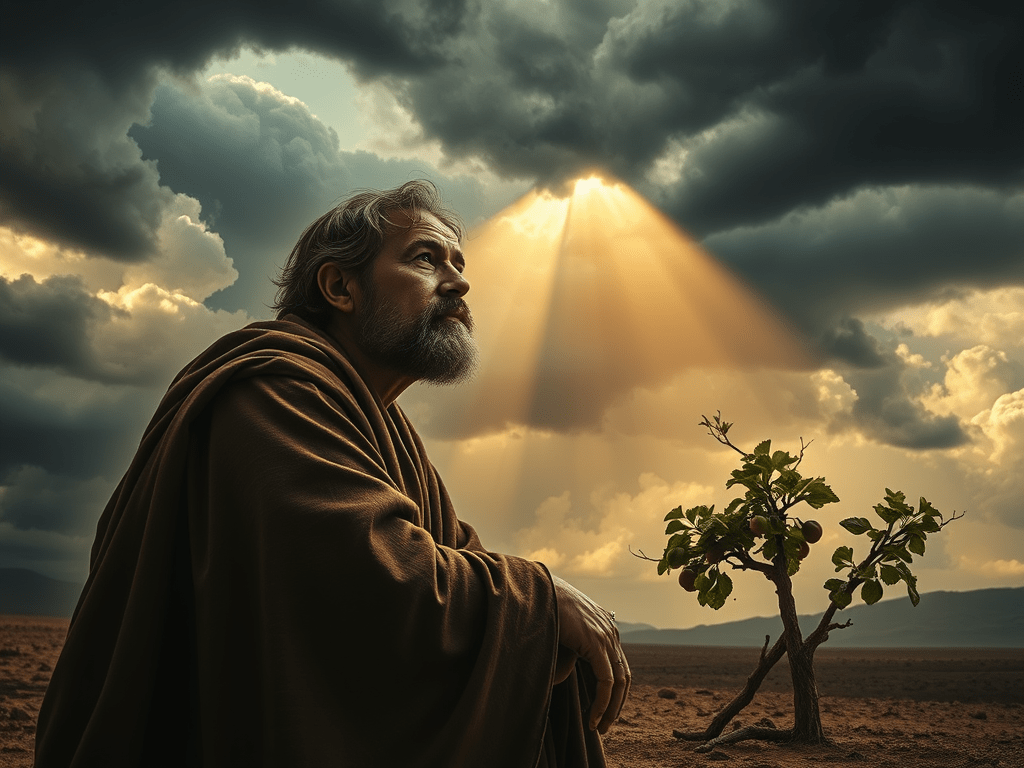
Continuing the Lessons from the Minor Prophets series. After Micah’s clear call to justice, mercy, and humility, I came to Habakkuk—and his words felt like a conversation I’ve had with God myself. Habakkuk doesn’t begin with proclamations; he begins with questions. He wrestles openly with God about injustice, suffering, and the silence of heaven. Reading his dialogue was like hearing my own doubts echoed back to me, but also being led toward a deeper trust.
Wrestling with Questions
Habakkuk’s honesty startled me. He didn’t hide his frustration; he brought it straight to God.
“O LORD, how long shall I cry, and thou wilt not hear! even cry out unto thee of violence, and thou wilt not save!” (Habakkuk 1:2, KJV)
I’ve prayed prayers like that—pleas that feel unanswered, cries that seem to vanish into silence. Habakkuk reminded me that faith doesn’t mean suppressing questions. It means bringing them honestly before God, trusting that He can handle my doubts.
God’s Surprising Answer
When God responded, His answer wasn’t what Habakkuk expected. He revealed that judgment was coming through the Chaldeans, a ruthless nation.
“For, lo, I raise up the Chaldeans, that bitter and hasty nation, which shall march through the breadth of the land, to possess the dwellingplaces that are not theirs.” (Habakkuk 1:6, KJV)
That answer unsettled me. Sometimes God’s plans don’t align with my expectations. Habakkuk taught me that God’s sovereignty often looks different than my sense of justice. His ways are higher, even when they’re hard to understand.
Living by Faith
One of the most pivotal verses in Habakkuk is found in chapter 2:
“Behold, his soul which is lifted up is not upright in him: but the just shall live by his faith.” (Habakkuk 2:4, KJV)
That phrase—“the just shall live by his faith”—echoes throughout Scripture. It reminded me that faith isn’t just belief; it’s a way of life. Habakkuk taught me that in seasons of uncertainty, faith is not passive—it’s active trust, a daily choice to live in reliance on God.
Choosing Joy in the Dark
Habakkuk’s conclusion is one of the most powerful declarations of faith I’ve ever read.
“Although the fig tree shall not blossom, neither shall fruit be in the vines; the labour of the olive shall fail, and the fields shall yield no meat; the flock shall be cut off from the fold, and there shall be no herd in the stalls: Yet I will rejoice in the LORD, I will joy in the God of my salvation.” (Habakkuk 3:17–18, KJV)
Those words challenge me deeply. Habakkuk chose joy even when circumstances were bleak. He didn’t deny the hardship—he acknowledged it fully—but he anchored his hope in God. Reading this, I realized that true faith isn’t the absence of questions; it’s the presence of joy in God despite them.
Lessons for My Life
Habakkuk’s journey continues to shape me in profound ways:
- Faith welcomes questions: God invites honesty, not silence.
- God’s sovereignty surprises me: His plans often stretch beyond my understanding.
- Faith is a lifestyle: Living by faith means daily reliance, not occasional belief.
- Joy is possible in hardship: Choosing to rejoice in God transforms despair into hope.
Conclusion
Habakkuk taught me that faith is not about having all the answers—it’s about trusting the One who does. His dialogue with God gave me permission to wrestle, but his final declaration showed me the power of choosing joy.
Reading Habakkuk felt like walking through my own doubts, only to emerge with a deeper, steadier faith. It’s a reminder that even when the fig tree doesn’t blossom, God remains the God of my salvation.
Discovering the Path of Salvation series
Discover more from Grow Stronger Roots
Subscribe to get the latest posts sent to your email.

 Grow Stronger Roots
One thought on “Habakkuk: Faith in the Midst of Uncertainty”