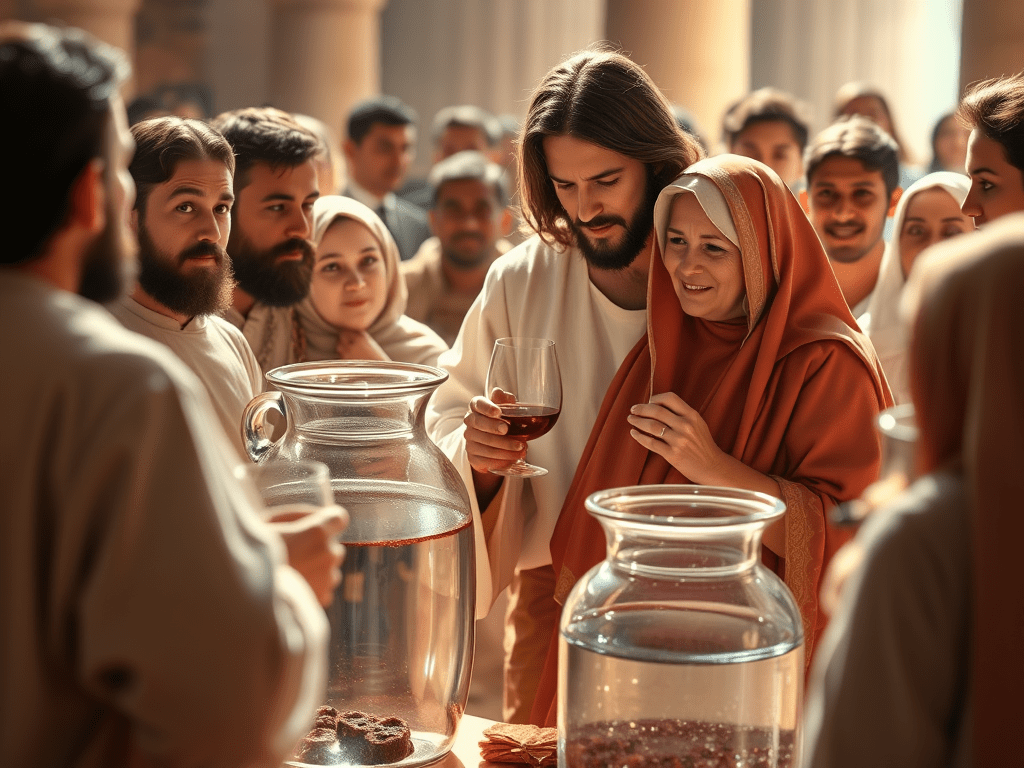
The first recorded miracle of Jesus in the Bible is the transformation of water into wine at a wedding in Cana, Galilee. This event, described in the Gospel of John, marks the beginning of His public ministry and reveals His divine power in a moment of celebration.
Jesus, His mother Mary, and His disciples were attending a wedding when the hosts ran out of wine—a significant social embarrassment in that time and culture. Mary, knowing her son’s divine nature, turned to Him for help. Though Jesus initially responded, “My time has not yet come,” He ultimately performed a miracle at her request.
Jesus instructed the servants to fill six large stone jars with water. When they drew from the jars, the water had turned into wine—not just any wine, but the finest quality. The master of the feast was astonished, noting that the best wine is usually served first, but in this case, it had been saved for last.
The Deeper Significance of the Miracle
The miracle at the wedding in Cana is rich with symbolism and theological meaning. Here are some key aspects of its significance:
1. Transformation and Renewal
Jesus’ act of turning water into wine represents transformation—both physical and spiritual. Water, often associated with purification in Jewish tradition, is changed into wine, a symbol of joy and abundance. This reflects the transformative power of Jesus’ ministry, turning the ordinary into the extraordinary.
2. The New Covenant
Wine is frequently used in biblical texts to represent the new covenant between God and His people. By performing this miracle, Jesus foreshadows the new relationship He will establish through His sacrifice, replacing old religious practices with a new era of grace and salvation.
3. Abundance and Celebration
The quality of the wine produced was superior to what had been served earlier, emphasizing God’s generosity. This miracle highlights the theme of divine abundance—God provides not just enough, but the best, reinforcing the idea that life with Christ is filled with joy and fulfillment.
4. Faith and Obedience
Mary’s role in the miracle is significant. She instructs the servants to follow Jesus’ commands, demonstrating faith and obedience. The servants, though unaware of the full scope of the miracle, obeyed and witnessed firsthand the power of Jesus. This teaches that faith often requires trust before understanding.
5. A Foreshadowing of the Wedding Feast of the Lamb
Biblical scholars often link this event to the ultimate wedding feast described in Revelation—the union of Christ and His followers. The wedding setting itself is symbolic of the relationship between God and His people, reinforcing the idea that Jesus is the divine bridegroom.
This miracle is more than just an act of kindness—it is a profound statement about Jesus’ mission and the transformation He brings to the world.
Current Archaeological Insights
Recent discoveries suggest that the true location of this miracle may have been Khirbet Qana, rather than the traditionally accepted site of Kafr Kanna2. Archaeologists have uncovered an underground Christian worship site with inscriptions referencing Jesus, as well as stone jars similar to those described in the Gospel.
The first miracle of Jesus remains a powerful testament to His divine nature and His ability to bring transformation—not just to water, but to lives.
Discover more from Grow Stronger Roots
Subscribe to get the latest posts sent to your email.

 Grow Stronger Roots